The best standalone samplers let you capture, edit, sequence, and perform without relying on a computer. They range from compact sample sequencers to full production workstations with pads, effects, synthesis, and deep arrangement tools.
Our 2026 roundup compares ten strong options for beatmakers, live performers, DJs, and producers who want a flexible hardware-centered workflow.
Best 10 Standalone Samplers Picks for 2026
Powerhouse Production Hub

- Full standalone production with sampling, sequencing, and synthesis
- 16 RGB pads, touchscreen, and extensive wired and wireless connectivity
- Includes effects, synth engines, sample content, and MPC Stems support
Best For: Producers building complete projects without a computer
Performance Sampling Specialist

- Fast waveform editing, auto-chop, resampling, and BPM detection
- 17 velocity-sensitive RGB pads with 32-voice polyphony
- Portable power options and a broad creative effects suite
Best For: Live beat-making and expressive sample manipulation
Portable Tracker Workstation
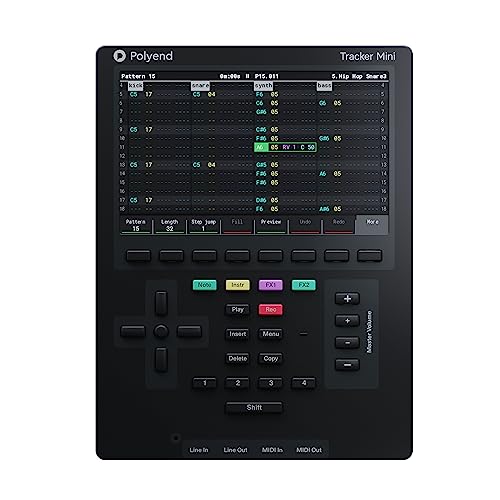
- Standalone sampler and audio workstation in a portable format
- Includes 4,000 preloaded samples
- Adds wavetable and granular synthesis
Best For: Mobile tracker-based production and experimental sound design
Hands-On Groovebox

- Samples from phones, turntables, synths, and other sources
- Eight sample tracks with chainable 32-step patterns
- Includes performance effects and up to four hours of battery life
Best For: Fast beat creation, portable production, and live groove performance
Best Compact Sampler
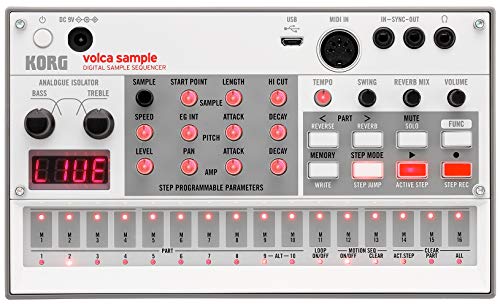
- Portable design with speaker and battery operation
- 16-step sequencing with pattern chaining
- Expanded memory and onboard effects
Best For: Portable pattern-based beatmaking
Best Groovebox Sampler
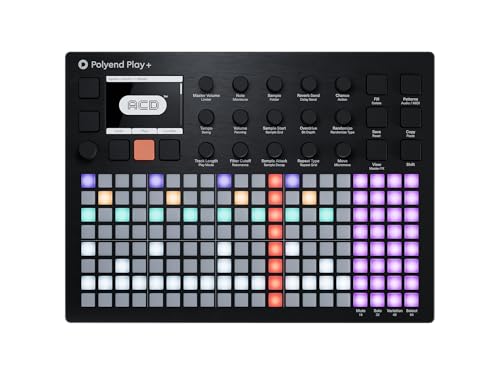
- 16 stereo tracks for expansive arrangements
- Backlit pads support live performance
- 5,000+ samples and 16GB microSD card included
Best For: Hands-on standalone production and performance
Best MPC Sampler

- Battery-powered standalone sampling with built-in mic and speaker
- 16 pads, chopping tools, resampling, and onboard effects
- MicroSD storage plus audio, MIDI, and USB-C connectivity
Best For: Portable beatmaking and DAWless MPC production
Booth-Ready Performance

- Laptop-free sampler and sequencer
- 16 pads plus 7-inch touchscreen
- PRO DJ LINK DJ-system integration
Best For: Live DJs creating beats, edits, and remixes
Portable Effects Station

- Battery-powered sampling with built-in mic
- 29 DSP effects for live manipulation
- Includes Loopmasters sample content
Best For: Mobile sampling and effects-focused performances
All-in-One Groovebox Bundle

- Eight sample tracks for layered grooves
- Record, slice, sculpt, and resample audio
- Includes headphones, storage, and MIDI cables
Best For: Standalone beat making with included accessories
Powerhouse Production Hub – Akai MPC One+
The Akai MPC One+ is a strong choice among standalone samplers for producers who want a complete beat-making setup without needing a computer. Its 16 velocity-sensitive RGB pads, touchscreen workflow, built-in sounds, extensive connectivity, and wireless features make it suitable for developing full projects from a desktop unit.
Best For: Producers and beat-makers who want deep standalone sequencing, sampling, synthesis, and MIDI control.
Pros:
- Operates independently with 128 MIDI and 8 audio tracks per project.
- Includes 16 velocity- and pressure-sensitive RGB pads, a 7-inch touchscreen, and dedicated controls.
- Offers Wi-Fi, Bluetooth MIDI, MIDI, CV/Gate, audio, USB, and SD connectivity.
- Includes synth engines, AIR effects, sample content, Splice access, and MPC Stems support.
Cons:
- Its broad feature set may take time to learn.
- The desktop-focused format is less immediately portable than a battery-powered sampler.
The MPC One+ stands out when flexibility and expandability matter more than minimalism. Choose it for comprehensive standalone production rather than a simple sample-triggering workflow.
Performance Sampling Specialist – Roland SP-404MKII
The Roland SP-404MKII is one of the most performance-oriented standalone samplers in this group. It combines responsive RGB pads, quick sample editing, resampling, sequencing, and a large effects selection in a compact unit designed for hands-on beat-making and live manipulation.
Best For: Beat-makers and performers who prioritize fast sampling, expressive pad play, and creative effects.
Pros:
- Provides 17 velocity-sensitive RGB pads and a vivid OLED display for waveform editing.
- Supports 32-voice polyphony, 160 samples per project, and 16 internal projects.
- Includes auto-chop, BPM detection, pitch shifting, envelopes, and resampling tools.
- Offers USB-C, six AA batteries, mobile-battery operation, and AC power options.
Cons:
- Its 2.6-pound portable design has less overall production scope than larger workstation-style samplers.
- The extensive effects and performance workflow may not suit users seeking a straightforward arranger.
Choose the SP-404MKII if sampling is part of your performance style. Its quick editing, resampling, pads, and distinctive effects make it especially compelling for tactile, improvisational workflows.
Portable Tracker Workstation – Polyend Tracker Mini
The Polyend Tracker Mini offers a compact tracker-style approach to standalone sampling and electronic music production. With 4,000 preloaded samples, wavetable and granular synthesis, and portable USB connectivity, it is suited to users who want a focused workstation that can travel easily.
Best For: Mobile producers interested in tracker workflows, sample-based composition, and experimental synthesis.
Pros:
- Functions as a standalone audio workstation sampler.
- Includes 4,000 preloaded samples for immediate sound exploration.
- Adds wavetable synthesis and granular synthesis for sound design.
- Portable design and USB connectivity support mobile use.
Cons:
- Its tracker-based workflow may require adjustment for users accustomed to pad-based samplers.
- The supplied notes provide fewer details about audio I/O and sequencing features than some competing models.
The Tracker Mini is a focused option for producers who value portability and unconventional composition tools. Its preloaded library and synthesis engines give it a distinctive role among standalone samplers.
Hands-On Groovebox – Novation Circuit Rhythm
The Novation Circuit Rhythm is a practical choice among standalone samplers for quickly turning recorded sounds into beats. It can sample from a phone, turntable, or synth, then offers eight sample tracks, pattern chaining, resampling, and performance effects for both production and live use.
Best For: Beat-makers who want an accessible, battery-powered sampler and groovebox for creating and performing patterns.
Pros:
- Records directly from external sources and supports slicing, reversing, looping, and resampling.
- Provides eight flexible sample tracks with 32-step patterns chainable to 256 steps.
- Includes Grid FX, reverb, delay, sidechain, and lo-fi tape-style processing.
- Offers up to four hours of battery operation.
Cons:
- It has fewer sample tracks and less broad workstation functionality than larger production units.
- The compact workflow is optimized for grooves and patterns rather than elaborate linear arrangements.
The Circuit Rhythm is an excellent fit when speed and immediacy are priorities. Its direct sampling, hands-on sequencing, and portable battery operation make it particularly useful for sketching ideas and performing beats.
Best Compact Sampler – Korg Volca Sample 2
Korg Volca Sample 2 Digital Sample Sequencer Drum Machine w/Pattern Chain Mode and 16-step Sequencer
Check Price On AmazonThe Korg Volca Sample 2 is a compact choice for musicians seeking standalone samplers with hands-on sequencing. Its 16-step sequencer, pattern chaining, expanded memory, effects, built-in speaker, and battery operation make it practical for portable beatmaking.
Best For: Portable electronic production, quick pattern-based beatmaking, and genres such as future bass, trap, and lo-fi hip-hop.
Pros:
- Compact, lightweight design with an integrated speaker and headphone output.
- 16-step sequencing includes pattern chain and start-delay features.
- Expanded memory, digital reverb, and double filter provide more sample and sound-shaping options.
- Runs on six AA batteries or an AC adapter and includes Librarian software support.
Cons:
- Its compact 16-step workflow may feel limited for more elaborate arrangements.
- Computer connectivity uses Micro USB rather than a larger USB connector.
Choose the Volca Sample 2 if portability and immediate pattern sequencing matter most. It is especially appealing for producers who want a lightweight, battery-powered sampler rather than a larger workstation.
Best Groovebox Sampler – Polyend Play+
The Polyend Play+ combines a standalone sampler, synthesizer, and MIDI workstation in a pad-focused groovebox. With 16 stereo tracks, backlit performance pads, more than 5,000 onboard samples, and microSD support, it suits producers who want a broad library and hands-on control.
Best For: Performance-oriented beatmaking, sample-based arrangements, and producers who want a versatile standalone workstation.
Pros:
- Offers 16 stereo tracks for building substantial sample-based projects.
- Includes backlit performance pads for hands-on control.
- Comes with more than 5,000 onboard samples and a 16GB microSD card.
- Provides USB connectivity and a dedicated 3.5mm headphone output.
Cons:
- The supplied notes do not specify battery-powered operation or a built-in speaker.
- Its larger feature set may be more than needed for simple, compact sampling.
The Play+ is a strong fit when track count, sample variety, and performance controls are higher priorities than minimal size. Its microSD slot also gives the onboard library room to expand.
Best MPC Sampler – Akai Professional MPC Sample
The Akai Professional MPC Sample is a portable entry point into the MPC workflow, pairing sampling, sequencing, effects, and finger drumming in a battery-powered unit. Its built-in microphone, speaker, rechargeable battery, microSD storage, and standalone operation make it one of the most self-contained standalone samplers in this group.
Best For: Beatmakers, DAWless creators, finger drummers, and beginners who want portable sampling with an MPC-style workflow.
Pros:
- Supports standalone recording, editing, and playback without a computer or DAW.
- Includes a rechargeable battery, built-in speaker, internal microphone, and microSD storage.
- Provides 16 responsive pads, a color display, sample chopping, timestretching, repitching, and resampling.
- Offers four internal effects processors with 60 effect types and comprehensive audio and MIDI connections.
Cons:
- The MIDI DIN adapter is not included.
- Its 1-year manufacturer warranty is shorter than the Polyend Play+ warranty listed in the supplied notes.
- At roughly 9.29 by 7.64 inches, it is less compact than the Volca Sample 2.
Pick the MPC Sample if you want a complete portable setup for capturing sounds, chopping samples, finger drumming, and shaping beats with effects. It offers the broadest standalone feature set here, while remaining approachable for new MPC users.
Booth-Ready Performance – Pioneer DJ DJS-1000
The Pioneer DJ DJS-1000 is a strong choice among standalone samplers for DJs who want hands-on beat triggering without a laptop. Its 16 velocity-sensitive pads, 7-inch touchscreen, and step sequencer support live pattern creation, while PRO DJ LINK helps synchronize it with compatible CDJ and DJM setups.
Best For: DJs building live remixes, edits, and sample-driven performances in a booth setup.
Pros:
- Standalone operation supports laptop-free live performance.
- Sixteen velocity-sensitive pads and a touchscreen provide tactile control.
- Built-in step sequencer makes on-the-fly drum pattern programming practical.
- PRO DJ LINK can sync samples with compatible Pioneer DJ equipment.
Cons:
- At 15 pounds, it is relatively heavy for a portable sampler.
- Its listed voltage is 230 volts, so power compatibility should be checked.
- Its four-channel specification may limit more complex routing needs.
The DJS-1000 is best suited to performance-focused users who value a spacious interface and DJ integration over extreme portability.
Portable Effects Station – Roland SP-404A
The Roland SP-404A is a compact option among standalone samplers, combining battery power, a built-in microphone, trigger pads, and performance-oriented effects. Its pattern sequencer, SD card content, and computer import software make it flexible for beat making and live sample manipulation.
Best For: Mobile beat makers and performers who want battery-powered sampling with extensive effects.
Pros:
- Built-in microphone and battery power support sampling away from the studio.
- Twenty-nine DSP effects include delay, looper, filter, and voice effects.
- Twelve trigger pads and a Sub Pad enable quick sample triggering and repeat effects.
- Includes a Sounds by Loopmasters SD card with samples, effects, and one-shots.
Cons:
- Its plastic body may feel less substantial than larger performance hardware.
- Importing computer audio requires the free Mac/Windows software workflow.
- The listed warranty provides one year of parts coverage but only 90 days of labor.
The SP-404A prioritizes portability and immediate effects control, making it especially appealing when battery operation and spontaneous sampling matter.
All-in-One Groovebox Bundle – Novation Circuit Rhythm
The Novation Circuit Rhythm bundle is a practical entry in the standalone samplers category for producers who want a complete beat-making setup. The Circuit Rhythm records, slices, sculpts, and resamples audio across eight sample tracks, and this package adds monitor headphones, a 32GB memory card, and two MIDI cables.
Best For: Beat makers who want a flexible standalone sampler bundled with basic monitoring and MIDI accessories.
Pros:
- Supports direct recording, slicing, sculpting, and resampling.
- Eight sample tracks provide room for layered grooves.
- Quantized or off-grid recording accommodates different timing approaches.
- Bundle includes headphones, 32GB microSD storage, and two MIDI cables.
Cons:
- The supplied notes list USB Type-C connectivity but do not specify additional audio connections.
- Accessory quality and suitability may vary depending on monitoring preferences.
- As a bundle, it may be less attractive if you already own headphones, storage, and MIDI cables.
The Circuit Rhythm offers a focused standalone workflow with useful performance effects and generous included accessories, making it a convenient starting point for sample-based production.
How We Picked the Best Standalone Samplers
We evaluated these Standalone Samplers by looking at their core workflow, sampling capabilities, sequencing flexibility, portability, performance controls, connectivity, and suitability for different experience levels. We also considered whether each device works best as a focused sampler, an all-in-one groovebox, a live performance instrument, or a compact production workstation.
Because hardware workflows vary widely, there is no single best choice for everyone. A device with deep editing and arrangement tools may suit studio production, while a smaller sampler with immediate controls may be better for live sets or travel.
Quick Comparison
| Best For | Recommended Type | What to Prioritize |
|---|---|---|
| Complete beat production | MPC-style workstation | Multitrack sequencing, pads, effects, and expansion options |
| Live remixing and effects | Performance sampler | Fast sample triggering, resampling, and hands-on effects |
| Portable composition | Compact tracker or groovebox | Battery life, storage, screen visibility, and streamlined sequencing |
| DJ-style sample performance | Dedicated performance sampler | Large pads, timing controls, outputs, and live manipulation |
| Budget-friendly sequencing | Compact sample sequencer | Simple pattern creation, sound loading, and immediacy |
Key Buying Factors for Standalone Samplers
Sampling and Editing Workflow
Check how easily you can record, trim, slice, pitch, loop, normalize, and resample audio. Some units favor quick, tactile manipulation, while workstation-style samplers provide more detailed editing and arrangement control.
Sequencing and Arrangement
Pattern-based sequencers are excellent for building grooves and improvising. If you plan to finish complete tracks on the device, look for song modes, longer arrangements, automation, and reliable scene or pattern transitions.
Performance Controls
Evaluate the pad layout, knobs, faders, touch controls, and effect access. Immediate hands-on control matters most for live use, where menu diving can interrupt a performance.
Connectivity and Storage
Consider MIDI, USB, audio inputs and outputs, headphone connections, external storage, and computer integration. Wireless connectivity can be useful, but dependable physical connections remain important in studio and stage setups.
Portability and Learning Curve
A compact unit may be easier to carry and faster to understand, but larger workstations often provide more room for detailed production. Choose the workflow you are most likely to use consistently.
Who Should Buy Which Standalone Samplers?
Choose an MPC-style sampler if you want one central device for beats, sequencing, sample manipulation, and broader production. Pick a Roland SP-style unit if live resampling, characterful effects, and immediate performance control are your priorities.
Trackers and compact grooveboxes suit producers who value portability, pattern experimentation, and focused workflows. Dedicated DJ-oriented samplers are a better match for performers who need fast triggering and hands-on control during sets. Finally, a smaller, simpler sampler can be the right choice for beginners or anyone who wants quick pattern creation without the complexity of a full workstation.