The best samplers for home studios make it easier to capture sounds, shape them into instruments, and build complete ideas without a complex setup. The right choice depends on whether you prioritize portability, hands-on controls, multitrack production, or deep effects and sequencing.
We selected 10 options spanning dedicated samplers, grooveboxes, software, and MIDI controllers so you can match your workflow, budget, and available studio space.
Best 10 Samplers for Home Studios Picks for 2026
Performance Powerhouse

- Fast sampling and sequencing workflow
- 32-voice polyphony with 16 projects
- Portable power and extensive effects
Best For: Performance-based beatmakers and sample-driven producers
Touchscreen Tabletop Studio
Blackbox Compact Sampling Studio

- Computer-free recording and sequencing
- Touchscreen-based workflow
- USB and MIDI hardware integration
Best For: Compact tabletop studios and hardware-focused producers
Portable MPC Groovebox

- Standalone, battery-powered operation
- 16 pads and fast sample chopping
- USB-C, audio, MIDI, and sync connectivity
Best For: Portable beatmaking, DAWless production, and beginners
Full DAW Production Hub
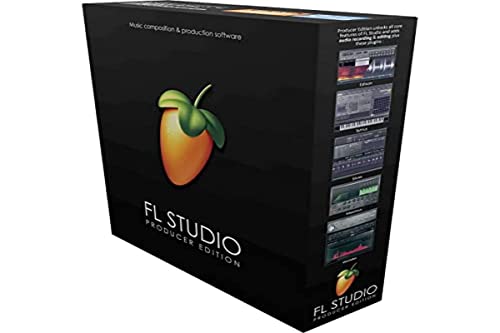
- Audio and MIDI multitrack recording
- Mac and Windows compatibility
- Computer-based FL Studio workflow
Best For: Home studios centered on a Mac or Windows computer
Deep Sound Design

- Four parallel stereo tracks with extensive processing
- Granular engine supports up to 128 grains
- Scenes, macros, and modulation for performance
Best For: Experimental sound design and live sample manipulation
Portable Beat Making
Teenage Engineering EP-133 K.O. II
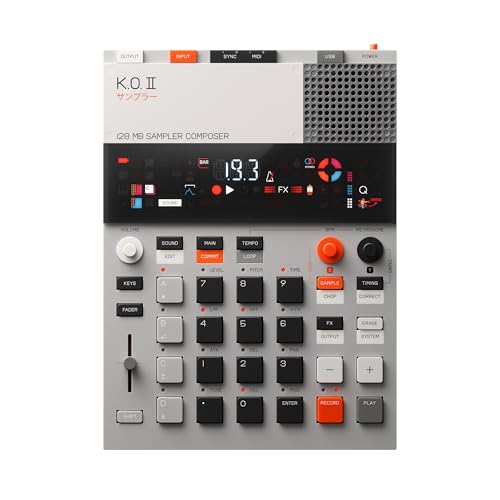
- Built-in microphone and line-in sampling
- Four groups of 99 patterns for quick arrangements
- Battery-powered design with built-in and punch-in effects
Best For: Portable beat making and fast sample-based sketches
Controller-Based Sampling
Akai MPK Mini MK3 MIDI Controller

- 25 velocity-sensitive mini keys and eight MPC pads
- Eight knobs for plugin and effect control
- Includes production software and sound content
Best For: DAW-based sampling and compact home-studio control
Portable Performance Sampler

- 29 DSP effects with filter, delay, looper, and voice effects
- 12 pads, Sub Pad, three knobs, and pattern sequencing
- 1GB SD card included; storage expandable up to 32GB
Best For: Hands-on beat-making and portable performance
Mobile Effects Sampler

- Built-in mic and battery power for portable sampling
- 29 DSP effects with pads, knobs, and rapid-repeat Sub Pad
- Loopmasters SD card plus Mac/Windows sample-import software
Best For: Portable sampling and AIRA-oriented performance setups
Beginner-Friendly Standalone Sampler

- 64GB storage and up to 15 minutes of 16-bit/48kHz sampling
- Built-in mic, analog input, USB audio, and built-in speaker
- 16-track step sequencer with 80 banks and app-based audio imports
Best For: Beginners building songs at home or on the go
Performance Powerhouse – Roland SP-404MKII
For home studios that prioritize hands-on beatmaking, the Roland SP-404MKII is a performance-focused choice among samplers for home studios. Its fast workflow, visual waveform editing, broad effects selection, and portable power options make it suitable for building and reshaping ideas without slowing down.
Best For: Performance-based beatmakers, sample-driven producers, and creators who want extensive effects and portable operation.
Pros:
- Fast workflow with quick startup, low-latency pads, and rapid sample editing.
- Offers 32-voice polyphony, 160 samples per project, and 16 internal projects.
- Includes waveform editing, auto-chop, BPM detection, resampling, and a wide effects suite.
- Can run from USB-C, a mobile battery, six AA batteries, or an AC adapter.
Cons:
- The supplied details list the body as plastic and the unit weight varies between the listed specifications.
- Its many effects and programming options may be more than beginners need.
The SP-404MKII is a strong fit when expressive pads, live-style manipulation, and sound shaping matter as much as sequencing. It is especially appealing for producers who want a compact sampler with substantial onboard capability.
Touchscreen Tabletop Studio – Blackbox Compact Sampling Studio
The Blackbox Compact Sampling Studio takes a streamlined approach to samplers for home studios. Its touchscreen interface supports recording, editing, sequencing, and song creation without a computer, while USB and MIDI connectivity helps it fit into a tabletop hardware setup.
Best For: Producers who want a compact, touchscreen-controlled sampler for computer-free tabletop production.
Pros:
- Supports recording, editing, sequencing, and song creation without a computer.
- Touchscreen control provides a familiar and fluid workflow.
- Can integrate synths, drum machines, and other external devices.
- Includes a microSD card, USB power cable, wall adapter, and two MIDI adapters.
Cons:
- The supplied notes do not specify detailed polyphony, effects, or storage capacity.
- Its compact touchscreen design may appeal less to users seeking extensive physical controls.
Blackbox is a practical choice for a minimal home-studio rig, particularly if you prefer touch control and a focused feature set. Its external-device support also gives it room to serve as the center of a small hardware setup.
Portable MPC Groovebox – Akai MPC Sample
The Akai Professional MPC Sample is a particularly accessible option among samplers for home studios, combining MPC-style pads, standalone operation, and a rechargeable battery. With a built-in microphone and speaker, sample chopping, onboard effects, and broad connectivity, it can move from quick sketches to a connected studio setup.
Best For: Beginners, beatmakers, finger drummers, DAWless creators, and producers who want a portable MPC workflow.
Pros:
- Works without a computer or DAW using its battery, speaker, microphone, and microSD storage.
- Provides 16 responsive pads, a color display, Instant Sample Chop Mode, and real-time timestretch/repitch.
- Includes four internal effects processors with 60 effect types and dedicated controls.
- Offers USB-C audio/MIDI, line input and output, headphones, MIDI, sync, and smart-device sampling.
Cons:
- The MIDI connection requires a 1/8-inch-to-DIN adapter, which is not included.
- The supplied dimensions and specifications are truncated in places, limiting detail for direct comparison.
MPC Sample stands out for its approachable, self-contained workflow and flexible I/O. It is a sensible pick if you want to sample, chop, and build grooves in the room or on the go, then connect the unit to a larger home-studio system.
Full DAW Production Hub – FL Studio 20 Producer Edition
FL Studio 20 Producer Edition is the software-based option in this selection of samplers for home studios. Rather than a dedicated hardware sampler, it provides audio recording and MIDI multitrack recording on Mac and Windows, making it a foundation for computer-based music production.
Best For: Home-studio producers who want a Mac or Windows DAW for audio recording and MIDI multitrack work.
Pros:
- Supports audio recording and MIDI multitrack recording.
- Runs on Mac and Windows systems according to the supplied compatibility details.
- Fits computer-based production with PC, laptop, and FL Studio compatibility.
Cons:
- It is software rather than a standalone hardware sampler.
- The supplied notes do not detail dedicated sampling controls, included instruments, or effects.
- It requires a compatible computer and supported operating system.
Choose FL Studio 20 Producer Edition if your priority is a complete computer-based recording environment rather than hands-on portable sampling. It can make sense as the central production platform for a home studio, with sampling handled inside the DAW workflow.
Deep Sound Design – S4 Sculpting Sampler
For home studios focused on experimental sound design, the S4 Sculpting Sampler combines four parallel stereo tracks with granular processing, modulation, scenes, macros, and a USB-C audio interface. It is a powerful option among samplers for home studios when transforming textures and movement matters more than simple beat triggering.
Best For: Sound designers, electronic musicians, and performers who want deep sample manipulation and evolving textures.
Pros:
- Four parallel stereo tracks, each with a five-device signal chain.
- Granular processing supports up to 128 grains with extensive control.
- Scenes, macros, and assignable modulators support expressive performance workflows.
- Includes stereo reverb, delay, resonator filtering, distortion, compression, and a master mixer.
Cons:
- Its extensive sound-design feature set may be more than beginners need.
- The textured plastic body and compact controls may not suit users seeking a traditional keyboard-style interface.
The S4 is best viewed as a dedicated sound-shaping instrument rather than a basic sample player. Its layered processing, modulation, and performance controls make it especially compelling for atmospheric, granular, and experimental studio work.
Portable Beat Making – Teenage Engineering EP-133 K.O. II
The teenage engineering EP-133 K.O. II is a compact sampler, drum machine, and sequencer for quickly turning recorded sounds into beats. For producers comparing samplers for home studios, its built-in microphone, portable battery operation, effects, and fast pattern-based workflow make it a flexible sketching and performance tool.
Best For: Beat makers and mobile producers who want quick sampling, pattern creation, and live performance controls.
Pros:
- Samples through the line input or built-in microphone and offers 128 MB of memory.
- Four groups of 99 patterns support fast beat variations and arrangement.
- Includes six master effects and 12 punch-in effects controlled by the multifunctional fader.
- Runs on four AAA batteries or USB-C and includes built-in speaker, MIDI, and sync connections.
Cons:
- Its four-track sequencer is less expansive than a full DAW-based production setup.
- The compact design may provide less hands-on space than larger studio hardware.
The K.O. II emphasizes speed and portability. It is a strong choice for capturing ideas, resampling, and building beat arrangements without being tied to a computer, while still offering connectivity for a broader setup.
Controller-Based Sampling – Akai MPK Mini MK3 MIDI Controller
The Akai Professional MPK Mini MK3 is a USB MIDI controller rather than a standalone sampler, but it can be a practical front end for samplers for home studios running a compatible DAW. Its 25 velocity-sensitive keys, MPC-style pads, knobs, arpeggiator, and included software support sample triggering and virtual instrument control.
Best For: Home-studio producers who want keyboard, pad, and plugin control in a compact USB controller.
Pros:
- Combines 25 velocity-sensitive mini keys with eight backlit MPC-style pads.
- Eight assignable knobs provide hands-on control over software instruments and effects.
- Includes an arpeggiator, pitch/modulation thumbstick, Note Repeat, and Full Level.
- Comes with MPC Beats, virtual instruments, sound content, and a Splice trial.
Cons:
- It does not sample or sequence independently; a USB-compatible computer and DAW are required.
- The mini keys are less suitable for players who prefer a full-size keyboard.
The MPK Mini MK3 makes the most sense when your sampling workflow is computer-based. It offers broad hands-on control in a small footprint, making it a useful companion to software samplers and virtual instruments rather than a replacement for standalone sampling hardware.
Portable Performance Sampler – Roland SP-404SX
The Roland SP-404SX is a compact choice among samplers for home studios, especially when you want hands-on pad triggering, onboard effects, and portable sample storage. Its 12 pads, Sub Pad, pattern sequencer, and included 1GB SD card support beat-making and live performance without requiring a computer.
Best For: Home-studio producers and performers who want tactile sampling, creative effects, and battery-free portable operation with expandable SD storage.
Pros:
- Includes 29 DSP effects, including filter, delay, voice effects, subsonic, and looper options.
- Offers 12 trigger pads, three control knobs, and a Sub Pad for rapid-repeat triggering.
- Supports quantized pattern sequencing, shuffle feels, and SDHC expansion up to 32GB.
Cons:
- The included SD card provides 1GB of storage, so larger libraries require expansion.
- Its listed connector is a 1/4-inch audio jack, which may require additional adapters for some setups.
The SP-404SX is a practical, effects-focused sampler for beat-making and performance. Choose it if immediate pad control and a broad effects palette matter more than extensive built-in storage.
Mobile Effects Sampler – Roland SP-404A
The Roland SP-404A combines portable sampling with a built-in microphone, battery power, and a substantial effects section. For home studios, it offers direct pad control, computer sample importing, and compatibility with the TR-8 sequencer when used with the required system version.
Best For: Producers who want to capture sounds away from the desk, perform with expressive effects, and integrate sampling with compatible AIRA hardware.
Pros:
- Built-in microphone and battery power support sampling and performance on the go.
- Provides 29 DSP effects, 12 trigger pads, three control knobs, and a Sub Pad.
- Includes a “Sounds by Loopmasters” SD card and free Mac/Windows software for importing and assigning audio.
- Can be triggered from a TR-8 with system version 1.50 or later.
Cons:
- TR-8 triggering requires the specified system version and compatible equipment.
- The listed warranty is one year for parts and 90 days for labor.
The SP-404A is a flexible option for samplers for home studios when portability and spontaneous sound capture are priorities. Its computer-import workflow also makes it useful for building a pad-based performance library.
Beginner-Friendly Standalone Sampler – Casio SXC-1
CASIO Portable STANDALONE Sampler SXC-1 Sampler for Beginners to Make and Play Songs Easily
Check Price On AmazonThe Casio SXC-1 is a small standalone sampler designed for straightforward song creation. It suits home studios that want a beginner-friendly unit with built-in sampling inputs, 64GB of storage, a 16-track step sequencer, and the flexibility to run from USB power or batteries.
Best For: Beginners and mobile creators who want an uncomplicated sampler with long recording time, built-in monitoring, and support for common audio formats.
Pros:
- Stores up to 64GB and supports up to 15 minutes of sampling at 16-bit/48kHz.
- Accepts sound through its built-in microphone, external analog input, or USB audio.
- Offers 16-track step sequencing, 80 banks, 16 simultaneous stereo sounds, and a built-in speaker.
- Imports WAV, FLAC, and MP3 files through the Casio Sampler App.
Cons:
- The device uses a 3.5mm stereo-mini connection rather than larger studio-style connectors.
- AAA batteries are not included, and USB power or compatible batteries are required.
- Audio imports depend on the Casio Sampler App.
The SXC-1 stands out for accessible sequencing, generous internal storage, and multiple sampling methods in a compact body. It is a strong fit if ease of use and portability are more important than advanced studio connectivity.
How We Picked the Best Samplers for Home Studios
We evaluated these products by looking at the features that matter most in a home setup: sampling flexibility, sequencing, sound-shaping tools, connectivity, portability, learning curve, and value. We also considered whether each option works best as a standalone instrument, a computer-based production tool, or a controller within a larger rig.
Because “sampler” can describe several product types, this roundup includes dedicated hardware, compact performance devices, music-production software, and a MIDI keyboard that can control sampling instruments. Check the workflow category before buying to ensure the product fits your expectations.
Quick Comparison
| Best For | Look For |
|---|---|
| Hands-on beatmaking | Pad control, responsive sequencing, and onboard effects |
| Portable production | Battery operation, compact design, and internal storage |
| Detailed sound design | Granular processing, modulation, filters, and flexible routing |
| Computer-based studios | Reliable software integration and a suitable MIDI controller |
| Beginners | Simple sampling controls, clear layout, and accessible sequencing |
Key Buying Factors for Samplers for Home Studios
Sampling and Storage
Check which sources the unit can sample, how much internal storage it provides, and whether storage can be expanded. If you plan to record vocals, field sounds, or long passages, input options and memory capacity matter as much as pad count.
Sequencing and Arrangement
Some samplers are designed for short loops and live triggering, while others support complete song arrangements. Look for pattern chaining, song mode, quantization, automation, and the number of tracks or parts if you want to finish songs without switching devices.
Sound Shaping and Effects
Filters, envelopes, pitch controls, slicing, granular processing, modulation, and onboard effects can dramatically change how useful a sampler feels. Performance-focused units often emphasize fast effects and resampling, while production-oriented models may offer deeper editing.
Connections and Workflow
Review audio inputs and outputs, MIDI, USB, headphones, microphone support, and computer compatibility. A standalone sampler can reduce screen time, but software may offer more editing depth and easier project management. Make sure your studio’s interface and controller connections are compatible.
Size, Power, and Learning Curve
Compact hardware is useful for mobile sessions and small desks, but smaller controls may require more menu navigation. Consider whether you need battery power, a built-in microphone, or immediate access to dedicated knobs and pads.
Who Should Buy Which Samplers for Home Studios?
Choose a Dedicated Performance Sampler for Hands-On Control
Musicians who want to chop samples, trigger clips, resample effects, and perform away from a computer should focus on dedicated hardware such as compact grooveboxes and performance samplers. These are especially useful for beatmakers and live performers who value immediacy.
Choose a Deeper Production Platform for Complete Songs
If your priority is arranging full tracks, recording multiple parts, and using extensive plug-ins, a computer-based production platform may be the better fit. Pairing software with a compact MIDI keyboard can provide tactile control while preserving editing flexibility.
Choose a Compact Sampler for Small Spaces or Travel
Portable models suit producers who work in bedrooms, shared spaces, or on the move. Prioritize battery life, built-in microphones, storage, and quick pattern creation rather than maximum connectivity.
Choose an Accessible Model for Learning
Beginners should favor a clear interface, straightforward sampling, and enough sequencing depth to grow without becoming overwhelming. Start with the workflow you are most likely to use consistently; simplicity often leads to more finished music than a feature-heavy device that stays unused.