The best headphones for calls make voices easier to understand while reducing distractions on your end. This roundup compares 10 wired, wireless, USB, Bluetooth, and open-ear options for remote work, commuting, and everyday conversations.
We focused on microphone clarity, connection options, comfort, controls, and practical features such as mute buttons, USB dongles, and noise reduction.
Best 10 Headphones for Calls Picks for 2026
Best for Long Workdays
PrancyBt KH120M Wireless Headset

- Up to 35 hours of operation
- Noise-reduction microphone and call mute
- Bluetooth plus Windows USB dongle
Best For: Remote work, extended meetings, and call-center shifts
Best Simple Wired Pick

- Integrated microphone for calls
- Inline controls for calls and volume
- Lightweight USB-C wired design
Best For: USB-C devices and uncomplicated everyday calling
Best for Dual-Device Use

- Pairs with a laptop and smartphone
- Up to 40 hours of talk time
- ENC, boom mic, and one-touch mute
Best For: Hybrid work and switching between computer and mobile calls
Best Plug-and-Play Value

- USB-A plug-and-play connection
- Rotating noise-canceling microphone
- Inline volume and mute controls
Best For: Desk-based computer calls and meetings
Top Pick for Hybrid Noise Control

- Hybrid ANC and ENC for focused calls
- USB dongle plus Bluetooth 5.4
- Up to 35 hours of talk time
Best For: Busy offices, home workspaces, and back-to-back computer calls
Best Wired Value
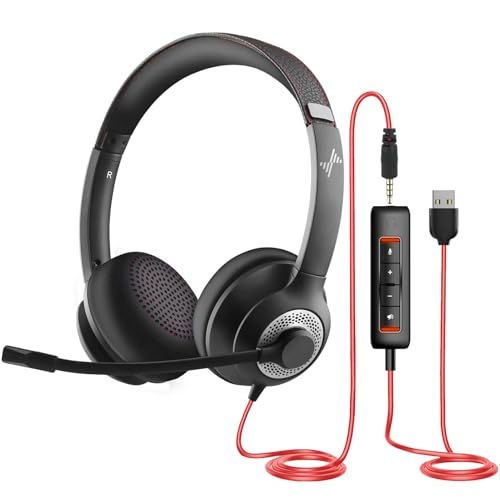
- Unidirectional noise-canceling boom mic
- USB and 3.5mm connections
- Comfort features with two-year warranty
Best For: Desk-based work, online classes, and call-center use
Best Open-Ear Design

- 23g open-ear, glasses-friendly comfort
- Dual AI noise-reduced microphones
- Up to 12 hours of talk time
Best For: Driving, commuting, and calls requiring environmental awareness
Best Plug-and-Play Pick

- USB-A plug-and-play setup
- Noise-cancelling microphone
- Lightweight on-ear design
Best For: PC and laptop calls at a desk
Best Budget Multi-Device Option

- 3.5mm plug with no charging required
- In-line call and media controls
- Two-pack with lightweight fit
Best For: Portable calls on compatible 3.5mm devices
Best for Managed Work Calls
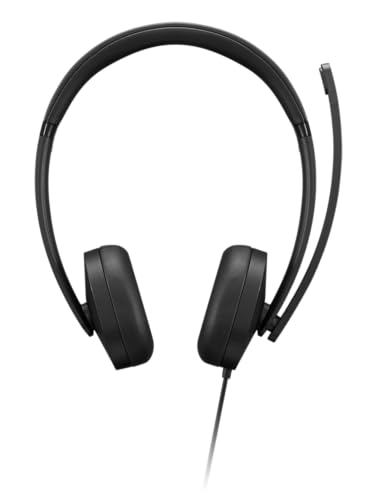
- AI noise-canceling support via Lenovo software
- Double-sided boom mic with mute control
- 140g design with replaceable earcups
Best For: Teams, Zoom, and other PC meeting platforms
Best for Long Workdays – PrancyBt KH120M Wireless Headset
If you need headphones for calls that can handle extended meetings and flexible computer setups, the PrancyBt KH120M combines a boom microphone, environmental noise reduction, mute control, and wireless connectivity. It supports Bluetooth plus a Windows-only USB dongle, with a stated range of up to 33 feet.
Best For: Remote workers and call-center users who want long battery life, wireless mobility, and a dedicated mute button.
Pros:
- Noise-reduction microphone is designed to filter surrounding interference during calls.
- Up to 35 hours of operation supports long shifts and consecutive meetings.
- Adjustable headband, soft protein-foam ear pads, and rotatable earcups support extended wear.
- Includes Bluetooth and a USB dongle for computers without built-in Bluetooth.
Cons:
- The USB dongle works only with Windows computers.
- It is not compatible with desk phones or landline telephones.
- The mute feature works only during active calls or meetings.
The KH120M is a practical wireless option when battery endurance and computer compatibility matter most. Check the Windows-only dongle limitation before buying, especially if your setup includes desk phones or another operating system.
Best Simple Wired Pick – Apple EarPods USB-C
For straightforward headphones for calls, Apple EarPods provide a lightweight wired design with a USB-C plug, integrated microphone, and cord controls. They connect directly to compatible USB-C devices, so there is no battery to charge or wireless pairing process to manage.
Best For: USB-C phone, tablet, or computer users who prefer compact wired earbuds for calls and everyday audio.
Pros:
- Built-in microphone is designed to capture your voice during phone and FaceTime calls.
- Inline remote lets you answer or end calls and adjust volume.
- USB-C connectivity works with devices that have a USB-C port.
- Lightweight design weighs 1.12 ounces.
Cons:
- They require a compatible USB-C port and are not wireless.
- The supplied notes do not describe active or environmental noise cancellation.
These EarPods suit buyers who value simplicity, low weight, and immediate plug-and-play calling. They are less suitable if you need wireless range, a boom microphone, or dedicated background-noise reduction.
Best for Dual-Device Use – KH53 Wireless Headset
The KH53 is a strong choice among headphones for calls when you regularly move between a computer and smartphone. Its environmental noise cancellation, boom microphone, one-touch mute, dual pairing, USB dongle, and 40-hour talk-time rating are geared toward busy workdays.
Best For: Hybrid workers and professionals who switch between laptop meetings and smartphone calls.
Pros:
- Dual pairing supports simultaneous connection to a laptop and smartphone.
- Environmental noise cancellation and a flexible boom mic are designed for clearer calls.
- Up to 40 hours of talk time and a two-hour full-charge time support heavy use.
- Includes a USB-A adapter for Windows PCs without native Bluetooth.
Cons:
- The dongle is not compatible with desk phones or landlines.
- The mute function activates only during calls.
- The included dongle is USB-A, which may require an adapter on some newer computers.
Choose the KH53 if dual-device connectivity and long talk time are higher priorities than a compact design. Confirm your computer’s USB port and remember that some MFB controls apply only to smartphone functions.
Best Plug-and-Play Value – Logitech H390 USB Headset
The Logitech H390 is a dependable wired option for headphones for calls on computers. Its USB-A connection, rotating noise-canceling microphone, inline volume and mute controls, and 6.23-foot cable make it convenient for desk-based meetings without charging or Bluetooth setup.
Best For: Computer users who want an easy USB headset for calls, meetings, and everyday listening.
Pros:
- USB-A plug-and-play setup requires no software installation.
- Rotating noise-canceling microphone can be moved out of the way when unused.
- Inline controls provide quick volume adjustment and call muting.
- Adjustable headband and swivel-mounted leatherette ear cushions support comfort.
Cons:
- It is wired and uses USB-A rather than Bluetooth or USB-C.
- The headset has no listed general noise-control feature beyond microphone noise cancellation.
- It is not water resistant.
The H390 is a sensible desk headset when simple setup and physical controls matter more than wireless freedom. Its Chromebook certification and compatibility with Windows, macOS, and ChromeOS broaden its usefulness for computer calling.
Top Pick for Hybrid Noise Control – M112 Wireless Work Headset
If you need headphones for calls in a busy office or home, the M112 combines hybrid ANC and microphone ENC to help reduce distractions and make your voice clearer. Its USB-A dongle offers a plug-and-play PC or Mac connection, while Bluetooth 5.4 supports dual-device use.
Best For: Professionals handling back-to-back Zoom, Teams, customer, or computer calls who want wireless flexibility and physical flip-to-mute control.
Pros:
- Hybrid ANC and ENC support quieter listening and clearer outgoing voice pickup.
- Included Qualcomm USB-A dongle provides a dedicated PC/Mac connection.
- Flip-to-mute microphone, dual connectivity, and up to 35 hours of talk time.
Cons:
- The USB dongle is not compatible with landlines, desk phones, or VoIP phones.
- Its over-ear design may be bulkier than an on-ear or open-ear alternative.
The M112 is a strong all-around choice when call clarity, long battery life, and quick mute access matter more than minimal size. Adjustable noise-control modes and a transparency mode add useful flexibility for office work.
Best Wired Value – JIAMQISHI EH01 USB Headset
The JIAMQISHI EH01 is a practical wired option for headphones for calls, online classes, and video meetings. Its unidirectional boom microphone is designed to focus on your voice, while the USB and 3.5mm connections work with a broad range of computers and mobile devices.
Best For: Home offices, call centers, students, and users who prefer a dependable wired headset without charging or Bluetooth pairing.
Pros:
- Noise-canceling 270-degree microphone can be worn on either side.
- USB and 3.5mm connectivity supports PCs, Macs, tablets, smartphones, and compatible gaming systems.
- Memory-foam earpads, adjustable headband, in-line controls, and a two-year warranty.
Cons:
- The wired design limits movement compared with wireless call headsets.
- The on-ear fit may provide less isolation than an over-ear model.
Choose the EH01 if consistent plug-in performance and broad compatibility are priorities. The long cable and in-line mute controls suit desk-based calls, while the built-in sound card also supports music, gaming, and online learning.
Best Open-Ear Design – O1 Bluetooth Call Headset
For headphones for calls that keep you aware of your surroundings, the O1 uses a lightweight open-ear design and weighs 23 grams. Dual microphones with AI noise reduction aim to improve voice pickup, while Bluetooth 5.4 provides wireless connectivity for calls, meetings, and driving.
Best For: Truck drivers, commuters, and professionals who want hands-free calls without fully covering their ears.
Pros:
- Open-ear, glasses-friendly design supports awareness and extended comfort.
- Dual microphones, a rotatable boom, and a dedicated mute sequence support hands-free calls.
- Bluetooth 5.4 offers up to 33 feet of range and up to 12 hours of talk time.
Cons:
- The open-ear design provides no active noise cancellation.
- Its three-press mute control may take more steps than a physical flip-to-mute boom.
The O1 makes the most sense when environmental awareness and low weight are essential. It is less suited to very noisy environments where strong listening-side isolation is more important, but its open-ear comfort is useful for long driving or meeting sessions.
Best Plug-and-Play Pick – Jabra Evolve 10
If you want headphones for calls that are simple to deploy at a desk, the Jabra Evolve 10 offers a straightforward USB-A connection, a lightweight on-ear design, and a noise-cancelling microphone for clearer conversations in busy workplaces.
Best For: PC and laptop users who want a lightweight wired headset for work meetings and everyday calls.
Pros:
- USB-A plug-and-play setup without complex installation
- Noise-cancelling microphone helps support clear conversations
- Adjustable boom arm works on either the left or right side
- Inline call and volume controls with a 2-year manufacturer warranty
Cons:
- Wired USB connectivity limits use to compatible computers and laptops
- On-ear design may provide less coverage than over-ear headsets
- Not water resistant
The Evolve 10 is a practical choice when dependable computer calling matters more than wireless convenience. Its compact build, reversible microphone, and simple controls make it well suited to a focused office setup.
Best Budget Multi-Device Option – Antool Wired Earbuds
For affordable headphones for calls across several devices, the Antool wired earbuds provide a 3.5mm connection, an in-line multifunction remote, and a microphone designed to support hands-free conversations without charging or Bluetooth pairing.
Best For: People who need compact wired earbuds for calls, online classes, commuting, or use with multiple 3.5mm devices.
Pros:
- Works immediately through a passive 3.5mm wired connection
- In-line controls handle calls, playback, volume, and track changes
- Lightweight 3-gram-per-ear design with an ergonomic 45-degree fit
- Two-pack includes a 2-year limited warranty
Cons:
- Requires a compatible 3.5mm headphone jack
- Passive noise control is less adaptable than active noise cancellation
- Earbud microphones may be less focused than boom-mic designs
These earbuds are a convenient low-maintenance option for users who move between phones, tablets, computers, and other 3.5mm equipment. The two-pack also provides a spare, while the remote keeps common call functions within reach.
Best for Managed Work Calls – Lenovo USB-A Stereo Headset
The Lenovo USB-A Stereo Headset is designed for workplace headphones for calls, combining a double-sided boom microphone with AI noise-canceling support through Lenovo software, in-line mute and volume controls, and compatibility with common meeting platforms.
Best For: Professionals using Teams, Zoom, Google Meet, Webex, Slack, or similar services on a PC or laptop.
Pros:
- AI noise-canceling enhancement is available through Lenovo Accessories and Device Manager software
- Double-sided boom mic and in-line controls support practical call management
- Lightweight 140g design with replaceable earcups
- Plug-and-play USB-A compatibility with several major meeting platforms
Cons:
- Requires a USB-A port and is not a wireless headset
- Noise-canceling software features depend on the Lenovo application
- Designed primarily for computer-based work calls
This Lenovo model is a strong fit for structured office communication, especially if mute access and software-assisted noise cancellation are important. Its light weight and replaceable earcups add useful practicality for recurring meetings.
How We Picked These Headphones for Calls
We selected models across several common use cases and budgets, including wired USB headsets, 3.5mm earbuds, Bluetooth headsets, and open-ear designs. Our comparison prioritizes call-focused features rather than music performance alone: microphone noise reduction, reliable connectivity, wearing comfort, controls, and compatibility with computers and phones.
Because call quality depends on the surrounding environment and the device used, check the product specifications and current customer feedback before buying. Features labeled ANC generally reduce sound reaching your ears, while ENC or microphone noise cancellation is intended to make your voice clearer to the person listening.
Quick Comparison
| Type | Best For | Main Advantage | Potential Trade-Off |
|---|---|---|---|
| Wireless headset | Flexible work setups | No cable and convenient controls | Requires charging |
| USB wired headset | Computer calls | Simple plug-and-play connection | Less portable |
| 3.5mm earbuds | Phones and basic calls | Compact and broadly compatible | Limited isolation and controls |
| Open-ear headset | Situational awareness | Keeps surrounding sounds audible | Less isolation in noisy spaces |
Key Buying Factors for Headphones for Calls
Microphone Performance
Look for a boom microphone when voice clarity is the priority, especially in shared offices or busy homes. Noise-canceling microphone technology can reduce steady background sounds, but it cannot eliminate every conversation, keyboard noise, or sudden interruption.
Connection and Compatibility
USB-A models are convenient for many desktops and laptops, while USB-C earbuds suit newer phones and computers. Bluetooth is more flexible, but verify supported devices, multipoint behavior, battery life, and whether a USB dongle is included. A 3.5mm headset remains useful for devices with a compatible audio jack.
Comfort and Controls
For long meetings, consider weight, ear-cup padding, headband pressure, and microphone placement. Dedicated mute and volume controls are useful during work calls. Flip-to-mute microphones can be especially convenient if you frequently move between speaking and listening.
Noise Control
Choose closed-back or noise-isolating designs when you need concentration. Choose an open-ear model when hearing announcements, traffic, coworkers, or other surroundings matters more than maximum isolation.
Who Should Buy Which Headphones for Calls?
Remote workers and frequent meeting attendees: Choose a wireless headset with a boom mic, mute controls, or a USB dongle for flexibility across devices.
Desktop and laptop users who want simplicity: A USB wired headset is usually the easiest option because it avoids charging and often works with minimal setup.
Phone users and travelers: Wired USB-C earbuds or compact 3.5mm earphones are portable and practical when battery-free operation is important.
People who need to stay aware of their surroundings: An open-ear Bluetooth headset can keep nearby sounds audible, though it may be less suitable for loud environments.
Budget-conscious buyers: Prioritize a comfortable fit and a clear microphone over advanced ANC. A straightforward wired model may deliver the most dependable value for occasional calls.