The best voice recorders for lectures make it easier to revisit explanations, capture details, and build accurate study notes without relying on hurried handwriting.
This roundup compares 10 options, from straightforward voice-activated recorders to AI models that transcribe and summarize recordings.
Best 10 Voice Recorders for Lectures Picks for 2026
Best All-Around Value
EVISTR L357 64GB Voice Recorder

- 1536kbps PCM stereo recording with noise reduction
- 64GB storage and up to 32 hours of continuous recording
- Voice activation, playback controls, and USB-C transfer
Best For: Students needing a straightforward lecture recorder
Best for AI-Powered Notes

- One-tap recording with automatic transcription and summaries
- Ask questions across recordings and extract action items
- Four-day battery and MagSafe-compatible design
Best For: Users who want lectures converted into organized notes
Best for Maximum Storage

- 128GB capacity with up to 9,296 hours of storage
- 1536kbps PCM and multiple MP3 recording options
- Voice activation, folders, bookmarks, and password protection
Best For: Frequent recorders managing a large lecture archive
Best Premium AI Recorder
Plaud Note Pro AI Voice Recorder
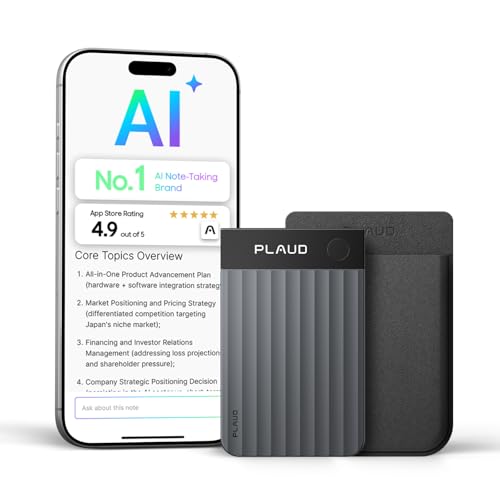
- Four microphones capture voices from up to 16.4 feet away
- AI transcripts, summaries, highlights, and action items
- Ultra-slim 30g design with 64GB storage
Best For: Users seeking premium capture and automated lecture summaries
High-Capacity Pick

- 1536Kbps dual-mic PCM recording
- 128GB storage and up to 45-hour battery
- Voice activation and variable-speed playback
Best For: Students and professionals recording long lectures
Smart Note-Taking Pick
Comulytic Note Pro AI Recorder

- AI transcription, summaries, and action items
- Triple-mic array with noise reduction
- 45-hour recording and Wi-Fi syncing
Best For: Lecture note-takers who want automated transcripts
Simple Everyday Pick

- 1536kbps PCM recording with noise reduction
- 128GB TF card and 50-hour battery
- One-button recording and voice activation
Best For: Students wanting easy lecture recording and playback
AI-Powered Lecture Note-Taking

- AI transcription and summaries in 113 languages
- 128GB storage with up to 33 hours of recording
- OTG phone transfer, noise reduction and privacy lock
Best For: Students who want recordings converted into organized notes
Flexible Study Playback
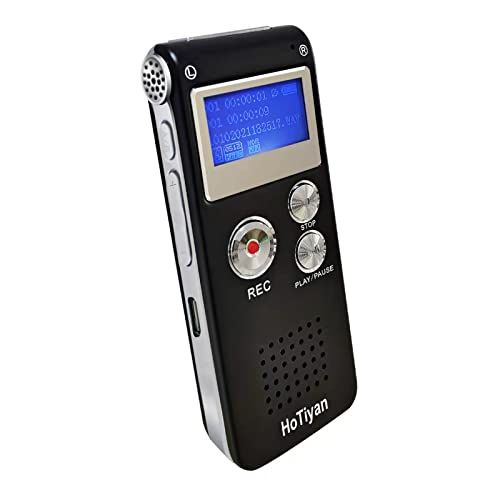
- Voice activation and noise reduction for classroom recording
- A-B repeat and variable playback speed for study review
- Up to 128 hours at 192kbps with MP3/WAV support
Best For: Students who frequently replay key lecture sections
Simple Lecture Recording
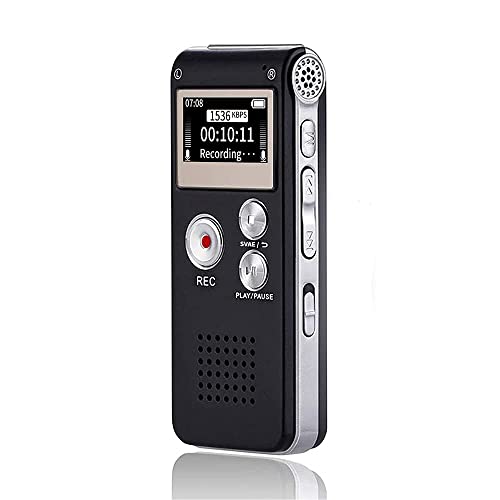
- Straightforward REC, STOP and PLAY controls
- Noise reduction and voice-activated recording
- 16GB storage with more than 30 hours of recording
Best For: Users wanting an easy recorder for everyday lectures
Best All-Around Value – EVISTR L357 64GB Voice Recorder
For shoppers comparing voice recorders for lectures, the EVISTR L357 offers a practical mix of clear PCM audio, voice activation, generous storage, and straightforward controls. Its adjustable gain and noise-reduction features are useful when recording lessons from a distance, while playback tools make review easier.
Best For: Students and professionals who want a traditional, high-capacity recorder for lectures, meetings, and interviews.
Pros:
- 1536kbps stereo recording with dynamic and PCM noise reduction
- 64GB storage, 32 hours of recording battery life, and up to 35 hours of playback
- Voice activation, adjustable gain, variable-speed playback, and A-B repeat
- Simple two-button recording and USB-C file transfer to Windows or Mac
Cons:
- It records and plays audio but does not offer automatic transcription or AI summaries
- Voice activation may require sensitivity adjustments for different classrooms
The EVISTR L357 is a strong conventional choice when reliable recording, long storage, and easy file management matter more than app-based features.
Best for AI-Powered Notes – Pocket AI Voice Recorder
The Pocket AI Voice Recorder takes a different approach to voice recorders for lectures by pairing one-tap capture with automatic transcription, summaries, action items, and searchable questions. It is especially convenient for users who want to turn recorded conversations into organized notes rather than manually replaying every file.
Best For: Students and professionals who want AI-assisted transcription, summaries, and follow-up notes from recorded conversations.
Pros:
- One-tap recording for in-person conversations, meetings, and calls
- Automatically creates transcripts, summaries, action items, and conversation maps
- “Ask Pocket” can answer questions grounded in your recordings
- Up to four days of battery life and MagSafe compatibility
Cons:
- Additional premium features are available through an optional subscription
- Its AI-focused workflow may be more than needed for simple audio recording
- Designed to work with a smartphone and uses Bluetooth connectivity
Pocket is best suited to lecture listeners who value efficient review and organized takeaways. Buyers should consider the optional subscription when evaluating its long-term cost.
Best for Maximum Storage – EVIDA 128GB Voice Recorder
Among voice recorders for lectures, the EVIDA V618 stands out for its 128GB capacity and flexible recording settings. It supports high-quality WAV capture as well as MP3 options, and its voice activation, folders, password protection, and playback features make it useful for managing a large library of recordings.
Best For: Students, teachers, and business users who record frequently and need extensive onboard storage.
Pros:
- 128GB capacity for up to 9,296 hours of recording at supported settings
- 1536kbps PCM recording plus selectable 128kbps and 192kbps MP3 modes
- Voice activation with six sensitivity levels to reduce silent sections
- Four-folder organization, password protection, bookmarks, and MP3 playback
Cons:
- The specifications list a mono, noise-cancellation microphone operation mode
- No headphone jack is listed in the supplied specifications
- Its many functions may take more time to learn than a basic recorder
The EVIDA V618 is a sensible pick for heavy recording schedules. Its large capacity and file-management features are particularly useful when recordings need to be kept for weeks or months.
Best Premium AI Recorder – Plaud Note Pro AI Voice Recorder
The Plaud Note Pro is a premium option among voice recorders for lectures, combining four microphones with transcription, tailored summaries, and workflow tools. Its thin 30-gram design is easy to carry, while the included Starter Plan provides 300 transcription minutes per month before any optional upgrade.
Best For: Users who want high-quality lecture capture followed by AI-generated summaries, notes, and structured follow-up materials.
Pros:
- Four microphones capture voices from up to 5 meters away
- Creates transcripts, highlights, summaries, decisions, and next steps
- Ultra-slim 2.99mm design with a 0.95-inch status display
- 64GB storage, up to 30 hours in Enhance mode, and included magnetic accessories
Cons:
- Advanced transcription capacity requires an optional paid plan beyond the included Starter Plan
- Online meetings require Plaud Desktop rather than the recorder alone
- It may be excessive for buyers who only need basic audio files
Plaud Note Pro is compelling when lecture recordings need to become usable notes or finished documents. Its subscription structure and AI-dependent workflow should be weighed against the convenience of automated processing.
High-Capacity Pick – Aiworth E36 Voice Recorder
If you need voice recorders for lectures with ample storage and detailed playback controls, the Aiworth E36 is a practical option. Its dual microphones support PCM recording up to 1536Kbps, while the included 128GB card and 45-hour battery help it handle extended lecture schedules.
Best For: Students, journalists, and anyone who wants high-capacity lecture recording with adjustable playback.
Pros:
- Dual-mic PCM recording supports up to 1536Kbps for clear audio.
- Includes 128GB of additional storage and up to 45 hours of continuous recording.
- Offers voice activation, password protection, A-B repeat, and 16 playback-speed levels.
- Front-facing controls and a graphic guide are designed for straightforward operation.
Cons:
- The product information lists differing storage and total recording-capacity figures, so verify the exact configuration before buying.
- Password protection uses a 3-digit code, which may be less flexible than a longer password.
The E36 stands out when storage, battery life, and playback flexibility matter more than a minimalist design. It is especially useful for reviewing long lectures and locating specific passages efficiently.
Smart Note-Taking Pick – Comulytic Note Pro AI Recorder
For shoppers comparing voice recorders for lectures with built-in transcription, the Comulytic Note Pro adds an AI-focused workflow. It records with a triple-mic array, transfers files over Wi-Fi, and can produce transcripts, summaries, action items, and to-do lists through its app.
Best For: Students and professionals who want lecture recordings converted into searchable notes and summaries.
Pros:
- Triple-mic recording and AI noise reduction are designed to capture speech within 5 meters.
- Provides unlimited transcription and basic summaries on the free Starter Plan.
- Offers 16GB local storage, up to 45 hours of continuous recording, and 107 days of standby time.
- Supports Wi-Fi syncing, 113-language transcription, and a built-in Spanish translator mode.
Cons:
- Advanced features such as deeper analysis and the assistant require the optional Premium Plan.
- Cloud storage and syncing depend on the app plan.
- Its AI-centered workflow may be more than needed if you only want basic audio files.
The Note Pro is the most feature-rich choice here for turning lectures into organized notes. Consider the subscription structure and app dependence if you prefer local, recorder-only operation.
Simple Everyday Pick – Arungo ZD70 Voice Recorder
The Arungo ZD70 is a straightforward choice among voice recorders for lectures, combining high-capacity storage with one-button operation. Its 1536kbps PCM recording, voice activation, and time-stamped files are useful for capturing and organizing classroom audio without a complicated setup.
Best For: Students and first-time users who want simple lecture recording, playback, and file organization.
Pros:
- 1536kbps PCM recording with an omnidirectional stereo microphone and noise reduction.
- Pre-installed 128GB TF card stores recording and music files.
- Voice activation can reduce unnecessary silent recording and storage use.
- Includes one-button recording, time-stamped files, A-B repeat, speed control, and password locking.
Cons:
- The listed digital recording time is 50 hours despite the 128GB storage, so actual capacity depends on recording settings and file use.
- The 1.44-inch screen is relatively small for navigating files.
- Voice activation may omit very quiet speech or pauses if the detection threshold is not suitable.
The ZD70 offers a useful balance of storage and accessible controls for everyday lecture capture. Its time-stamped files and voice activation are particularly convenient for reviewing multiple classes or study sessions.
AI-Powered Lecture Note-Taking – EVISTR L359 AI Voice Recorder
If you want voice recorders for lectures that can do more than save audio, the EVISTR L359 adds AI-assisted transcription and summaries to a portable recording workflow. It records up to 3072Kbps, includes noise reduction and voice-activated recording, and connects to a phone through the included OTG cable for processing in the AI DVR Link app.
Best For: Students and professionals who want lecture recordings converted into searchable, organized notes.
Pros:
- Supports transcription in 113 languages, smart summaries, mind maps, speaker identification and Ask AI insights through the companion app.
- Offers 128GB of storage and up to 33 hours of continuous recording.
- One-touch recording, a HOLD switch and password encryption help simplify operation and protect files.
- Wired OTG transfers recordings directly to compatible phones without relying on Bluetooth.
Cons:
- AI features require the AI DVR Link app and a compatible phone.
- Its built-in microphone operation is listed as mono, which may be less suited to wide-room stereo capture.
The L359 is the most feature-rich option here for turning lectures into structured study material. Choose it if transcription and summaries matter as much as recording capacity; otherwise, a simpler recorder may be more straightforward.
Flexible Study Playback – HoTiyan 8GB Lecture Recorder
For shoppers comparing voice recorders for lectures, this HoTiyan model focuses on practical classroom recording and review features. Its higher-sensitivity microphone, noise reduction, voice activation and A-B repeat function help capture lessons and revisit important sections without unnecessary complexity.
Best For: Students who want a compact recorder with long recording capacity and study-focused playback controls.
Pros:
- Voice-activated recording can pause during quieter periods to reduce unwanted silence in files.
- Up to 128 hours of recording at 192kbps, with lower-quality modes offering additional capacity.
- A-B repeat, variable playback speed and file timestamps support reviewing lecture material.
- Includes password protection, MP3/WAV support, a 3.5mm headphone jack and MP3-player functionality.
Cons:
- The 8GB storage is considerably smaller than the capacity of the EVISTR model.
- Transfers use the supplied Micro USB cable rather than USB-C.
- Continuous recording is rated at up to 20 hours, so extended use may require charging.
This is a sensible choice when replay tools are central to your study routine. It provides useful lecture-focused controls and substantial low-bitrate recording capacity, though its smaller storage and older Micro USB connection are worth considering.
Simple Lecture Recording – Sunlan 16GB Voice Recorder
If you prefer voice recorders for lectures with uncomplicated controls, the Sunlan 16GB recorder keeps the workflow simple: press REC to start, STOP to finish and PLAY to review. It also combines noise reduction, voice activation and A-B repeat with a small USB-rechargeable design.
Best For: Buyers seeking a straightforward recorder for lectures, meetings and occasional audio playback.
Pros:
- One-button recording and simple playback make it easy to operate quickly in class.
- DSP noise reduction and a sensitive microphone are designed to capture clearer speech.
- Voice activation can reduce silent sections and conserve recording time and power.
- 16GB storage, USB file transfer and more than 30 hours of continuous recording provide practical everyday capacity.
Cons:
- It records in WAV format rather than offering MP3 recording support.
- Playback is rated at about seven hours, which is shorter than its recording time.
- The listed microphone operation is mono, so it may not provide broad stereo room coverage.
The Sunlan is a good fit for buyers who value ease of use over advanced organization features. It lacks AI transcription and uses a basic USB connection, but its voice activation and long recording endurance cover the essentials for lecture capture.
How We Picked the Best Voice Recorders for Lectures
We focused on features that matter in classrooms and lecture halls: recording clarity, microphone performance, battery practicality, storage capacity, ease of playback, portability, and useful note-taking tools. The selection includes simple recorders for dependable audio capture as well as AI-enabled devices for transcription and summaries.
Because specifications and software support can vary by seller and region, verify the current storage, recording format, transcription limits, app requirements, and included accessories before buying.
Quick Comparison
| Recorder type | Best for | Main advantage |
|---|---|---|
| Basic digital recorder | Students who want simple operation | Easy recording and playback |
| High-capacity recorder | Frequent recording | More space for long sessions |
| Voice-activated model | Hands-off recording | Can reduce quiet gaps and conserve storage |
| AI voice recorder | Fast note creation | Transcription, summaries, and searchable content |
Key Buying Factors for Voice Recorders for Lectures
Audio Quality and Microphone Pickup
Prioritize clear speech over headline storage numbers. A recorder with noise reduction, adjustable recording quality, or a sensitive microphone can be more useful than one with extreme capacity. For large lecture rooms, check whether the device supports an external microphone or benefits from being placed near the speaker.
Storage, File Handling, and Battery Life
Long lectures create large files, especially at higher quality settings. Choose enough internal storage for your schedule and confirm how recordings transfer to a computer or phone. USB connectivity, a familiar audio format, and a battery that comfortably lasts through classes make everyday use easier.
Voice Activation and Playback
Voice activation can limit silent sections, but it may miss very quiet speech if sensitivity is set incorrectly. Playback controls, bookmarking, fast-forwarding, and headphone support are valuable when reviewing material. Test the settings before an important lecture.
Transcription and Privacy
AI recorders can save time by turning speech into text or summaries, but many depend on a companion app, internet access, subscriptions, or cloud processing. Review language support, accuracy with multiple speakers, export options, and how recordings are stored. Always follow campus rules and obtain permission when recording others.
Who Should Buy Which Voice Recorders for Lectures?
Choose a Basic Digital Recorder If…
You want reliable recording, straightforward playback, and minimal setup. These models are often the best value for students who plan to listen back rather than automatically generate notes.
Choose a High-Capacity or Voice-Activated Model If…
You record several classes, meetings, or interviews each week and want fewer storage-management tasks. Confirm that activation settings do not cut off quiet introductions or questions.
Choose an AI Recorder If…
You need searchable transcripts, summaries, or faster conversion from lectures to study notes. Account for any subscription costs and treat AI output as a draft that should be checked against the original audio.