Choosing among voice recorders for beginners can be surprisingly difficult. Storage capacity, recording controls, battery life, playback, and audio quality all matter—but the best starter model should remain simple to operate.
We selected 10 beginner-friendly digital recorders for lectures, meetings, interviews, notes, and everyday voice memos, including compact options and advanced models with transcription features.
Best 10 Voice Recorders for Beginners Picks for 2026
Best Overall
EVISTR L357 64GB Digital Voice Recorder

- Simple two-button recording with playback controls
- 64GB storage and up to 32 hours of continuous recording
- Voice activation, adjustable gain, and USB-C file transfer
Best For: Students and everyday users needing ample storage
Best Smart Features

- Transcribes in 113 languages with smart summaries
- 128GB storage and 33 hours of continuous recording
- One-button operation with password lock and OTG transfers
Best For: Users who want recordings converted into organized notes
Best Budget Pick
HoTiyan 8GB Digital Voice Recorder
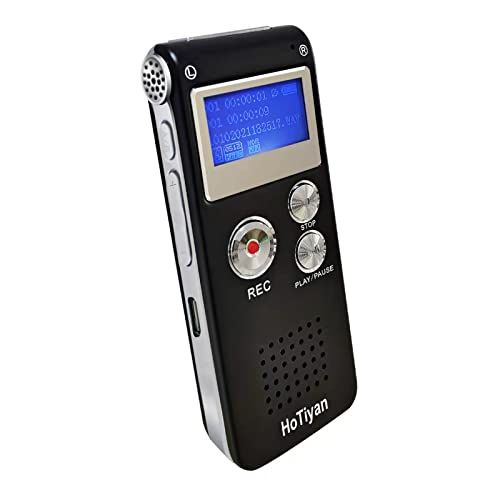
- Straightforward three-button recording and playback
- Voice activation, A-B repeat, and variable playback speed
- Up to 20 hours of continuous recording per charge
Best For: Occasional lectures, meetings, and first-time users
Best Simple Controls
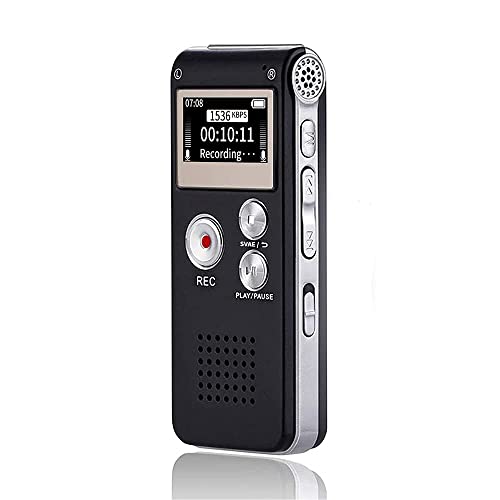
- Dedicated REC, STOP, and PLAY buttons
- Voice activation and DSP noise reduction
- 16GB storage with over 30 hours of recording
Best For: Beginners wanting straightforward lecture and meeting recording
Best Value Starter
One-Click Digital Voice Recorder
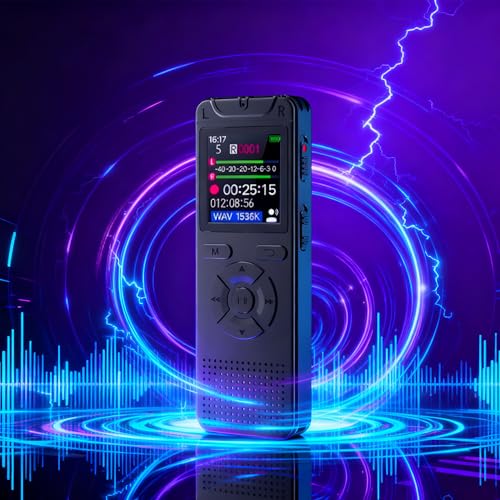
- Simple side-button recording with playback
- 8GB storage and microSD expansion support
- Up to 55 hours of stated continuous use
Best For: First-time users, students, and everyday note-taking
Maximum Storage Pick

- 128GB capacity rated for 9,296 recording hours
- Six voice-activation sensitivity levels
- Supports MP3 and high-quality WAV recording
Best For: Frequent lectures, meetings, and long-term file storage
Simple Study Companion

- Three-click operation for straightforward recording
- A-B repeat for language and lesson review
- Compact design with headphone jack and USB transfer
Best For: Students, language learners, and classroom recording
Top Storage Pick

- One-button recording with voice activation
- Includes 128GB TF card and up to 50 hours of use
- Playback includes A-B repeat and speed control
Best For: Beginners needing simple operation and extensive storage
Best for Playback Control

- Dual-mic PCM recording up to 1536Kbps
- Offers 16 playback-speed settings and A-B repeat
- Adds password protection and guided setup
Best For: Beginners who frequently review lectures or interviews
Simple Everyday Option

- 64GB storage for lectures and meetings
- Includes voice activation and on-device playback
- Compact design with MP3 support and headphone jack
Best For: Casual beginners seeking essential recording features
Best Overall – EVISTR L357 64GB Digital Voice Recorder
For beginners comparing voice recorders for beginners, the EVISTR L357 offers a practical balance of simple controls, high capacity, and flexible playback features. Its two-button recording design makes it easy to start and save recordings, while adjustable gain, voice activation, and noise reduction support lectures, meetings, and interviews.
Best For: Students, teachers, and everyday users who want generous storage and straightforward operation.
Pros:
- 64GB storage can hold up to 4,660 hours at 32Kbps.
- Adjustable seven-level recording gain, PCM noise reduction, and up to 1536Kbps stereo recording.
- Supports voice activation, A-B repeat, variable playback speed, and MP3/WAV formats.
- USB-C connectivity, 32 hours of continuous recording, and time-stamped file names.
Cons:
- The many recording and scheduling options may take time for complete beginners to learn.
- Its advertised maximum recording time depends on using the lower 32Kbps setting.
The L357 is a strong all-purpose choice when storage and control matter. Beginners can start with one-touch recording, then explore gain, voice activation, and playback settings as their needs grow.
Best Smart Features – EVISTR L359 AI Voice Recorder
The EVISTR L359 is a forward-looking option for beginners choosing voice recorders for beginners who want more than audio files. It combines one-button recording with AI transcription, summaries, mind maps, speaker identification, and Ask AI tools through the AI DVR Link app.
Best For: Students and professionals who want to turn recordings into searchable notes and summaries.
Pros:
- Supports transcription in 113 languages and AI-generated summaries.
- 128GB storage, up to 33 hours of continuous recording, and a lightweight 65g design.
- 3072Kbps HD recording, noise reduction, and voice-activated recording.
- Password encryption, a HOLD switch, and wired OTG phone transfers improve convenience and file security.
Cons:
- AI transcription and related features require the AI DVR Link app and a compatible phone connection.
- The wired OTG workflow is less convenient for users expecting wireless transfers.
The L359 makes the most sense if you plan to transcribe or organize recordings after capture. Beginners should be comfortable using the companion app to get the full benefit from its smart features.
Best Budget Pick – HoTiyan 8GB Digital Voice Recorder
For beginners seeking affordable voice recorders for beginners, this HoTiyan model keeps the core experience uncomplicated. It offers three-button recording, saving, and playback, plus voice activation, A-B repeat, variable speed playback, and an MP3 player function.
Best For: First-time buyers who need a compact recorder for occasional classes, meetings, or interviews.
Pros:
- Simple three-button controls support quick recording and playback.
- Voice activation can reduce silent sections and conserve storage.
- 8GB capacity offers up to 128 hours at the listed 192Kbps setting and up to 560 hours at 32Kbps.
- Includes noise reduction, password protection, time-stamped files, and MP3/WAV support.
Cons:
- Only 20 hours of continuous recording per charge.
- Micro USB connectivity is less current than USB-C.
- The recorder is limited to 8GB of storage and up to 199 recording files.
This is a sensible entry-level recorder for users who prioritize basic controls and low-capacity everyday recording. Its storage and battery limits are worth considering before choosing it for frequent, long sessions.
Best Simple Controls – Sunlan 16GB Voice Recorder
The Sunlan 16GB recorder is a beginner-friendly option among voice recorders for beginners because its controls are easy to understand: press REC to start, STOP to finish, and PLAY to listen. It also adds voice activation, A-B repeat, noise reduction, and removable-drive functionality for basic everyday use.
Best For: Beginners who want a no-frills recorder for lectures, interviews, and meetings.
Pros:
- Dedicated REC, STOP, and PLAY controls make the basic workflow easy to learn.
- Voice activation can start recording when sound is detected and reduce idle recording time.
- 16GB storage and more than 30 hours of continuous recording.
- DSP noise reduction, 1536Kbps recording, A-B repeat, and USB file transfer.
Cons:
- The listed recording format is WAV rather than a choice of WAV and MP3.
- Playback time is listed at about seven hours.
- Its microphone operation is described as mono, which may be less suitable for wider stereo capture.
The Sunlan is a good fit when ease of use matters more than advanced file management. Its dedicated physical controls and voice activation help new users begin recording with minimal setup.
Best Value Starter – One-Click Digital Voice Recorder
For shoppers seeking voice recorders for beginners, this Metyoxmmx model emphasizes simple operation: a side button starts recording even when the device is powered off, while the built-in playback makes quick review straightforward. It also combines voice activation, noise reduction, password protection, and USB-C connectivity in a compact design.
Best For: Students, meeting participants, and first-time users who want affordable recording with long battery life and easy controls.
Pros:
- One-click recording and immediate playback are beginner-friendly.
- 8GB of built-in storage supports up to 2,400 hours, with support for a 128GB microSD card.
- Offers up to 55 hours of continuous use in the stated 512kbps WAV mode.
- Includes voice activation, password protection, A-B repeat, MP3 playback, and USB flash-drive functionality.
Cons:
- The supplied details do not specify the included microSD card, so expanded storage requires a separate purchase.
- The built-in microphone and compact screen may be less suited to users seeking advanced external-microphone controls.
This is a practical entry-level choice when straightforward controls, storage, and battery endurance matter more than specialized recording features. Its wide feature set also gives beginners room to grow.
Maximum Storage Pick – EVIDA 128GB Voice Recorder
This EVIDA model is one of the more storage-focused voice recorders for beginners, with 128GB capacity, voice activation, playback, and multiple recording formats. Its four-folder system helps organize files, while customer support includes phone assistance for setup guidance.
Best For: Students, teachers, business users, and anyone recording frequently who wants unusually high storage capacity.
Pros:
- 128GB storage is rated for up to 9,296 hours of recordings.
- Records in MP3 at 128kbps or 192kbps and WAV at up to 1536kbps.
- Six voice-activation sensitivity levels can help reduce silence and low-level snippets.
- Includes password protection, A-B repeat, bookmarks, scheduled recording, MP3 playback, and USB file transfer.
Cons:
- The details list no headphone jack, which may limit convenient private playback.
- Battery life is listed at up to 54 hours, so extended users may still need regular charging.
The large capacity and adjustable voice activation make this a strong fit for frequent recording. Beginners may also appreciate the available phone support, though the feature-rich interface could take longer to learn than a basic recorder.
Simple Study Companion – Aomago 64GB Mini Recorder
For beginners comparing voice recorders for beginners, the Aomago L169 keeps the core workflow simple: record, save, and play with three clicks. Voice activation, A-B repeat, MP3/WAV support, and computer transfer add useful flexibility for classes, interviews, and study review.
Best For: Students and learners who want a small recorder for lectures, language practice, and reviewing selected passages.
Pros:
- Three-click recording, saving, and playback is easy to understand.
- Voice activation helps focus recordings on spoken content and conserve space.
- A-B repeat supports language study and replaying lesson segments.
- 64GB storage, a 3.5mm headphone jack, USB transfer, and MP3 playback add everyday versatility.
Cons:
- Battery life is listed at 30 hours, shorter than the other options here.
- The supplied details list 16 hours of digital recording time despite the 64GB storage rating, so buyers should verify how that figure applies.
- Its stated recording quality and feature set are more basic than models offering 1536kbps PCM recording.
This compact Aomago is a sensible study-oriented option when easy controls and A-B review matter most. Its shorter listed battery life makes it better for routine sessions than extended recording away from a charger.
Top Storage Pick – 128GB Voice Recorder
For beginners comparing voice recorders for beginners, this model keeps recording straightforward with one-button operation, voice activation, and a pre-installed 128GB TF card. Its PCM recording mode, playback tools, and time-stamped files make it practical for lectures, meetings, interviews, and language practice.
Best For: Beginners who want abundant storage and simple controls for frequent recording.
Pros:
- One-button recording and saving require minimal setup.
- 128GB included storage and up to 50 hours of battery and recording time support extended use.
- Voice activation, A-B repeat, and speed control help with review and playback.
- Time-stamped file names make recordings easier to locate.
Cons:
- The 1.44-inch screen may feel compact for navigating files.
- Noise reduction and recording quality depend on the recording environment.
This is a beginner-friendly choice when storage capacity and accessible playback features matter most. The included earphones, USB-C cable, and one-year warranty add convenience for getting started.
Best for Playback Control – Aiworth E36 Recorder
The Aiworth E36 is a versatile option for shoppers seeking voice recorders for beginners, combining front-facing controls with a graphic guide and video tutorial. It supports dual-mic PCM recording, voice activation, password protection, and adjustable playback speed for reviewing lectures or interviews.
Best For: Students, writers, and office users who prioritize detailed playback and file privacy.
Pros:
- Front-mounted buttons and tutorial materials support a shorter learning curve.
- Dual microphones and up to 1536Kbps PCM recording are designed for clear audio capture.
- Sixteen playback-speed levels and A-B repeat help locate and review specific passages.
- Password protection helps restrict access to stored recordings.
Cons:
- Its stated battery life is up to 45 hours, less than some higher-capacity models.
- The storage specifications are presented inconsistently in the supplied details, so buyers should verify the actual configuration.
With its strong review controls and security feature, the E36 suits beginners who expect to revisit recordings often. Its 3.81-inch body and 2-inch screen also provide a relatively practical format without adding complex operation.
Simple Everyday Option – 64GB Audio Recorder
This 64GB model is a straightforward choice for people exploring voice recorders for beginners. It offers built-in recording, playback, voice activation, a 3.5mm headphone jack, and MP3 support for lectures, meetings, interviews, and personal use.
Best For: Casual users who want a compact recorder with generous storage and basic playback.
Pros:
- 64GB storage provides room for long-term recording.
- Playback lets you review lectures and meeting audio directly on the device.
- Voice activation can help capture speech without continuous manual recording.
- Its compact dimensions make it convenient to carry.
Cons:
- The 1.1-inch screen is smaller than those on the other listed models.
- Its stated digital recording time is up to 75 hours, so it may be less suited to very extensive archives.
- The supplied details list a USB 2.0 Type-B interface rather than USB-C.
This recorder covers the essentials without emphasizing advanced playback controls. It is a reasonable starting point for beginners who mainly need storage, voice activation, and on-device playback for everyday recordings.
How We Picked the Best Voice Recorders for Beginners
We focused on features that make recording straightforward for first-time users: one-button or clearly labeled controls, voice activation, built-in microphones, playback, USB connectivity, and dependable storage. We also considered practical capacity, rechargeable battery design, password protection, noise reduction, and whether a recorder is suited to lectures, meetings, interviews, or personal notes.
Storage claims can be very high on budget recorders, but usable recording time depends on audio format and quality settings. For most beginners, ease of finding, saving, and transferring files is more important than choosing the largest number.
Quick Comparison
| Best For | Look For | Why It Matters |
|---|---|---|
| Simple voice memos | One-click recording and playback | Reduces setup time and confusion |
| Lectures and meetings | Voice activation and noise reduction | Helps capture speech while limiting silent gaps |
| Frequent recording | 64GB or more and rechargeable power | Provides room for many files between transfers |
| Interviews and notes | Clear microphones and easy file transfer | Makes recordings easier to review and share |
| Heavy note-taking | AI transcription or summarization | Can reduce manual review time |
Key Buying Factors for Voice Recorders for Beginners
Controls and Playback
A beginner-friendly recorder should make recording status obvious and provide simple buttons for play, pause, rewind, and file selection. A screen is helpful, especially when managing multiple lectures or interviews.
Audio Quality and Microphone Performance
Look for a built-in microphone designed for speech and, when possible, adjustable recording quality. Noise reduction may improve clarity in busy rooms, but it cannot replace good placement. Keep the recorder close to the speaker and avoid covering the microphone.
Storage, Battery, and File Transfer
Choose enough storage for your routine. Eight or 16GB may suit occasional notes, while 64GB or 128GB is more comfortable for regular recording. USB connectivity simplifies charging and moving files to a computer. Check whether the included cable or connector works with your devices.
Voice Activation and Security
Voice activation can reduce empty sections and conserve storage, although very quiet speech may not trigger recording reliably. Password protection is useful if recordings contain private meetings, interviews, or personal information.
Who Should Buy Which Voice Recorders for Beginners?
Choose a compact, one-click recorder if you want quick voice memos with minimal setup. Students recording lectures should prioritize playback, voice activation, ample storage, and a rechargeable battery. Meeting and interview users should favor clear microphones, noise reduction, and easy file organization.
If you regularly convert recordings into written notes, an AI transcription model may justify its higher complexity—provided you understand that transcription accuracy depends on speech clarity, accents, background noise, and the software’s language support. For occasional use, a straightforward recorder is often the better value.