Whether you are capturing rehearsal ideas, sampling tape textures, or preserving demos, the right cassette recorder can make an analog workflow far more convenient. The best choice depends on recording inputs, portability, tape-handling features, and whether you need digital conversion.
We selected 10 cassette recorders for musicians ranging from compact battery-powered players to full-size dual decks with USB, dubbing, pitch control, and external recording options.
Best 10 Cassette Recorders for Musicians Picks for 2026
Studio Transfer Pick
TEAC W-1200B Dual Cassette Deck

- Records and plays on both decks
- USB transfers up to 48 kHz/16-bit PCM
- Mic mixing and 12% pitch control
Best For: Home studios, dubbing, and cassette archiving
Portable Note-Taking Pick
KLIM K7 Cassette Player and Recorder

- Records through a built-in microphone
- Converts tapes to MP3 on a 16GB SD card
- Rechargeable and includes earphones
Best For: Portable ideas, voice memos, and tape conversion
All-in-One Boombox Pick
KLIM Portable Cassette Recorder

- Records from USB, microphone, or radio
- Adds Bluetooth, AM/FM, and USB playback
- AC or four C-cell battery operation
Best For: Casual songwriting and portable listening
Dubbing and Digitizing Pick
Pyle Dual Stereo Cassette Deck

- Normal- and high-speed cassette dubbing
- USB cassette-to-MP3 transfers
- RCA connections and CrO2 support
Best For: Home dubbing and cassette archiving
Best Portable Radio Recorder
Compact AM/FM Cassette Recorder
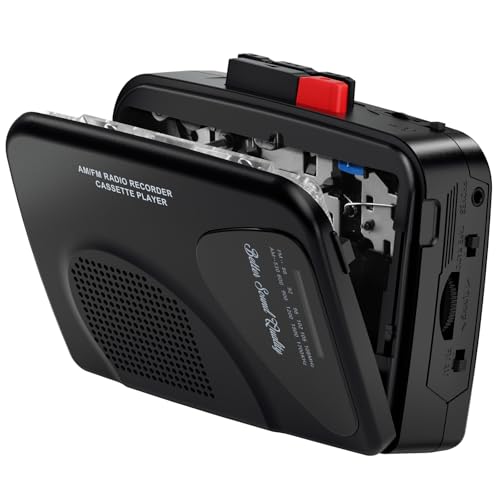
- Records broadcasts and external sounds to tape
- Built-in speaker with included 3.5mm headphones
- Runs on two AA batteries or 5V DC
Best For: Portable musical sketches, mixtapes, and casual recording
Best One-Touch Recorder
Proscan Cassette Player and Recorder

- One-touch recording for quick captures
- Built-in and external microphone options
- Includes AUX input and AC/DC operation
Best For: Simple musical ideas, interviews, and spoken recordings
Best Modernized Analog Recorder

- Built-in microphone records ideas directly to tape
- USB-C or two-AA power options
- Speaker playback plus 3.5mm headphone output
Best For: Portable musical sketches and practice recordings
Simple Portable Recording

- Plays and records cassette tapes
- Built-in microphone for quick capture
- Battery or AC powered
Best For: Simple voice notes and portable cassette recording
One-Touch Musicians' Recorder
JENSEN MCR-100 Cassette Recorder

- One-touch cassette recording
- Automatic level control
- Built-in mic and auxiliary input
Best For: Quick music, note, and source recording
Flexible Cassette Source Recorder

- Records through mic or aux input
- Includes external mic and aux cable
- Built-in speaker and AC adapter
Best For: Recording performances or device audio to cassette
Studio Transfer Pick – TEAC W-1200B Dual Cassette Deck
TEAC W-1200B Dual Cassette Deck with Recorder with USB Pitch Control Karaoke-Mic-in and Remote
Check Price On AmazonFor musicians looking for cassette recorders for musicians, the TEAC W-1200B is a versatile home-studio deck with two independent cassette mechanisms, recording on both decks, pitch control, and USB output for computer archiving.
Best For: Musicians who need flexible dubbing, cassette recording, and CD-quality digital transfers.
Pros:
- Records and plays on both independent decks, with one-touch dubbing and parallel recording.
- USB output supports digital recording to PC or Mac at up to 48 kHz/16-bit PCM.
- Includes mic mixing, 12% pitch control, A-B repeat, Type I/II recording support, and Type IV playback.
Cons:
- Its dual-deck home setup is less portable than a handheld recorder.
- Metal tapes can be played but are not supported for recording.
The W-1200B is a strong choice when recording flexibility and tape preservation matter more than portability. Its USB connection also makes it practical for moving cassette performances or demos into a computer-based workflow.
Portable Note-Taking Pick – KLIM K7 Cassette Player and Recorder
The KLIM K7 is a compact option for musicians seeking cassette recorders for musicians that can capture ideas without extra equipment. Its built-in microphone records to an SD card, while the cassette function plays tapes and converts them to MP3.
Best For: Portable voice memos, rehearsal ideas, and convenient cassette-to-MP3 conversion.
Pros:
- Built-in microphone records audio directly to the included 16GB SD card.
- Converts cassette tapes to MP3 without requiring an app or additional device.
- Rechargeable 1000mAh battery, built-in speaker, earphones, and 3.5mm headphone jack support mobile use.
Cons:
- It cannot record audio onto cassette tapes.
- Its portable design is intended for simple capture rather than a full multi-input studio setup.
The K7 works best as a lightweight idea recorder and tape digitizer. Musicians can capture quick thoughts or musical sketches digitally, but should choose another model if recording directly onto cassette is essential.
All-in-One Boombox Pick – KLIM Portable Cassette Recorder
For musicians who want cassette recorders for musicians with more than tape playback, this KLIM boombox combines cassette recording with AM/FM radio, USB playback, Bluetooth streaming, and a built-in microphone.
Best For: Casual songwriting, portable rehearsal capture, radio recording, and all-in-one listening.
Pros:
- Records onto cassette from USB, the built-in microphone, or the radio.
- Combines cassette playback with Bluetooth, USB, AM/FM radio, and a 3W stereo speaker.
- Runs from AC power or four C-cell batteries and includes an earphone jack.
Cons:
- Four C-cell batteries are required for portable use and are not included.
- The boombox format is less compact than a dedicated handheld cassette player.
This KLIM model is a practical choice for musicians who value convenience and multiple recording sources. It is especially useful for informal sessions, though its boombox design is better suited to casual recording than detailed studio production.
Dubbing and Digitizing Pick – Pyle Dual Stereo Cassette Deck
The Pyle PT659DU.5 suits musicians seeking cassette recorders for musicians for home dubbing and tape transfers. Its dual-deck design supports normal- or high-speed copying, while USB connectivity transfers cassette audio to MP3 on a PC or Mac.
Best For: Home cassette duplication, tape-library digitization, and connecting to an amplifier or receiver.
Pros:
- Offers normal- and high-speed dubbing between the two cassette decks.
- USB connection supports cassette-to-MP3 transfers on PC and Mac computers.
- Includes RCA input and output, CrO2 support, recording-level control, and noise reduction.
Cons:
- Only deck B records or performs dubbing.
- Its 11.47-pound home-deck design is not intended for portable use.
The Pyle is a focused home component for musicians working with existing cassette material. It offers useful dubbing and conversion tools, but the single recording deck and stationary design should be considered before choosing it for active recording sessions.
Best Portable Radio Recorder – Compact AM/FM Cassette Recorder
For shoppers comparing cassette recorders for musicians, this compact Mersoco model combines tape playback and recording with AM/FM radio in a lightweight design. It can record broadcasts or external sounds to cassette and supports either two AA batteries or a 5V DC connection.
Best For: Musicians and hobbyists who want an affordable, portable recorder for capturing ideas, making mixtapes, or monitoring radio broadcasts.
Pros:
- Records AM/FM broadcasts and external sounds to cassette.
- Includes a built-in speaker, 3.5mm headphones, and USB-to-DC cable.
- Offers portable battery operation alongside 5V DC power.
- Compact controls provide playback, recording, fast-forward, and rewind functions.
Cons:
- Two AA batteries are required for battery-powered use.
- The 5V adapter is not included.
- The listed frequency response is 125–6.3 kHz, which may not suit demanding recording applications.
This is a practical entry-level choice when portability and flexibility matter more than studio-oriented features. Its radio tuner, voice-activation recording, and included earphones make it useful for casual musical sketches and everyday tape recording.
Best One-Touch Recorder – Proscan Cassette Player and Recorder
PROSCAN Cassette Player & Recorder with Microphone, Headphone Jack, Aux in, Black
Check Price On AmazonAmong cassette recorders for musicians, the Proscan PRC124AMZ stands out for its straightforward one-touch recording and flexible microphone setup. It includes a built-in free-standing microphone, an external microphone jack, AUX input, and both AC/DC operation.
Best For: Musicians, students, and speakers who prefer simple controls and want to record ideas, interviews, classes, or conferences.
Pros:
- One-touch recording simplifies capturing audio quickly.
- Includes a free-standing microphone and external microphone jack.
- Automatic level control is designed to support clear recordings.
- Provides AUX input, headphone output, fast-forward, and rewind.
Cons:
- At 1.74 pounds, it is less lightweight than smaller portable cassette players.
- The supplied notes do not specify battery requirements or recording media performance.
- The product description does not identify a built-in speaker.
The Proscan is a sensible option for users who value accessible recording controls and microphone flexibility. Its carry handle helps with transport, while the AC/DC design supports use in different locations.
Best Modernized Analog Recorder – USB-C Cassette Player
This Reshow cassette player and recorder is a convenient pick for musicians seeking cassette recorders for musicians with a more current power option. It plays tapes through a built-in speaker or headphones, while its built-in microphone records musical ideas, voice memos, and practice sessions directly to cassette.
Best For: Musicians who want an easy-to-use analog sketchbook for spontaneous ideas, practice recordings, and portable tape listening.
Pros:
- Built-in microphone supports direct recording of musical ideas and voice memos.
- Offers built-in speaker playback and a 3.5mm headphone connection.
- Supports two AA batteries or USB-C power.
- Compact grey-white design is suited to home use, travel, and casual listening.
Cons:
- AA batteries are not included.
- The supplied notes do not specify recording-level controls or external microphone input.
- Its built-in microphone may be less flexible than a dedicated microphone setup.
With simple controls and USB-C power, this model balances retro tape operation with a convenient modern connection. It is best viewed as a portable idea-capture tool rather than a full-featured recording system.
Simple Portable Recording – Coby Cassette Player/Recorder
For musicians seeking cassette recorders for musicians with straightforward controls, the Coby CVR-22 combines cassette playback and recording in a compact design. Its built-in microphone handles quick voice notes and basic audio capture, while battery or AC power supports use at home or away from a desk.
Best For: Musicians and hobbyists who want simple cassette playback and built-in-mic recording.
Pros:
- Plays cassettes and records new audio in one device.
- Built-in microphone supports spontaneous voice notes and interviews.
- Battery or AC operation adds placement flexibility.
- Headphone jack and aux input support private or connected listening.
Cons:
- Requires four C batteries for portable use.
- The built-in microphone is suited to simple capture rather than a more elaborate recording setup.
The Coby is a practical choice when ease of use and portability matter more than advanced recording controls. Its clearly labeled buttons and multiple power options make it a convenient entry point for basic cassette-based recording.
One-Touch Musicians' Recorder – JENSEN MCR-100 Cassette Recorder
The JENSEN MCR-100 is a practical option among cassette recorders for musicians, combining cassette playback with one-touch recording and automatic level control. Its built-in condenser microphone, auxiliary input, retractable handle, and headphone jack make it adaptable for rehearsals, notes, and everyday listening.
Best For: Musicians who value quick recording, automatic level control, and flexible audio inputs.
Pros:
- One-touch recording simplifies capturing music, lectures, or notes.
- Automatic level control helps maintain consistent recording volume.
- Auxiliary input accepts audio from compatible external sources.
- Retractable handle and headphone jack support portable, private use.
Cons:
- The built-in microphone records in mono.
- Its listed warranty is limited to 90 days.
With its accessible controls and automatic recording level adjustment, the JENSEN is well suited to musicians who want a convenient cassette recorder without manually balancing levels. The auxiliary input further broadens its recording options beyond the built-in microphone.
Flexible Cassette Source Recorder – Deluxe Products DP-CASR-101
The Deluxe Products DP-CASR-101 gives musicians a flexible way to create cassette recordings from a microphone or an auxiliary source. It includes an external microphone, aux-in cable, built-in condenser microphone, speaker, and AC adapter, making it a well-equipped choice for basic home or portable recording.
Best For: Musicians who want to record performances or external device audio directly to cassette.
Pros:
- Records to cassette through the included external microphone or built-in microphone.
- Aux-in cable enables recording from compatible smartphones, laptops, or tablets.
- Includes an external microphone, AC adapter, and built-in speaker.
- Carrying handle and optional battery operation support portability.
Cons:
- Four C batteries are required for portable use and are not included.
- Auxiliary recording requires a source device with a headphone-out jack.
The Deluxe Products model stands out for its included accessories and source flexibility. It is a sensible pick for musicians who want to experiment with recording both live sound and compatible device audio onto cassette.
How We Picked the Best Cassette Recorders for Musicians
We focused on the features that matter in real musical workflows: recording reliability, input flexibility, playback quality, portability, power options, and ease of use. The selection includes simple voice and rehearsal recorders, portable units with radios or auxiliary connections, and component-style decks suited to home studios and tape duplication.
Because cassette hardware varies widely, we also considered whether each model supports built-in microphone recording, microphone or auxiliary input, USB transfer, MP3 conversion, dual-deck dubbing, or pitch adjustment. These features can make a major difference depending on whether you are documenting ideas, creating lo-fi recordings, or archiving an existing tape collection.
Quick Comparison
| Best For | Look For | Typical Format |
|---|---|---|
| Portable songwriting notes | Built-in microphone, speaker, and battery power | Compact cassette player/recorder |
| Rehearsal recording | One-touch recording, clear controls, and convenient monitoring | Portable recorder |
| Tape archiving | USB or MP3 conversion and stable playback | Portable digital-conversion player |
| Dubbing and home-studio use | Dual decks, RCA connections, and recording controls | Component cassette deck |
| Experimental tape work | Pitch control, external inputs, and reliable transport | Advanced cassette deck |
Key Buying Factors for Cassette Recorders for Musicians
Recording Inputs
A built-in microphone is useful for quick demos, spoken notes, and ambient recordings. For instruments or mixers, choose a recorder with microphone, auxiliary, RCA, or other external inputs. Confirm the connection type and whether the input records directly to tape.
Portability and Power
Battery operation is valuable for rehearsals, travel, field recording, and songwriting away from an outlet. AC support is useful at home and helps avoid interruptions during longer sessions. A built-in speaker and headphone jack provide flexible monitoring, but headphones generally offer more accurate listening.
Digital Conversion and Connectivity
USB or MP3 conversion can simplify archiving tapes on a computer or memory card. These functions are convenient, but they do not automatically guarantee professional audio quality. Check the supported storage format, included cables, software requirements, and transfer controls before buying.
Tape Transport and Musical Features
Look for straightforward play, stop, rewind, and record controls. Musicians interested in lo-fi effects or pitch experimentation may benefit from pitch control, while users duplicating tapes should prioritize dual-deck recording and dubbing. Auto-reverse, speed stability, and dependable tape handling are also worth checking.
Who Should Buy Which Cassette Recorders for Musicians?
Choose a compact portable recorder if you mainly capture lyric ideas, lessons, rehearsals, or voice memos. A model with a built-in microphone and speaker keeps the setup simple. Select a portable unit with an auxiliary input when you want to record from another playback device or small mixer.
For musicians preserving a cassette library, prioritize USB or MP3 conversion and headphone monitoring. For home studios, tape duplication, or more controlled recording, a full-size dual cassette deck with RCA connections is usually the better fit. If you specifically want cassette coloration and hands-on experimentation, prioritize pitch control and external-input flexibility over radio or convenience features.