A reliable tuner is essential onstage, where bright lights, loud monitors, and quick song changes can make tuning difficult. The right model should lock onto notes quickly, remain visible from playing position, and fit smoothly into your rig.
We compare 10 stage-ready guitar tuners, including pedal tuners for silent, hands-free operation and clip-on options for portable setups.
Best 10 Guitar Tuner for Stage Picks for 2026
Stage-Proven Precision
BOSS TU-3 Compact Chromatic Tuner

- Tank-tough pedal design with bright adjustable display
- +/- one-cent accuracy and automatic signal muting
- Supports extended-range and drop-tuned instruments
Best For: Live players seeking a durable, highly visible pedal tuner
Compact Board Specialist
OnStage GTP7000 Mini Guitar Tuner Pedal

- Small pedal design for space-conscious boards
- Four-color display with three tuning modes
- True bypass and +/- 0.5-cent tolerance
Best For: Compact pedalboards needing a readable true-bypass tuner
Cable-Free Convenience
D'Addario Nexxus 360 Rechargeable Clip-On Tuner

- Up to 24 hours of tuning per charge
- Bright 360-degree rotating display
- Strong clamp and adjustable 415–465Hz calibration
Best For: Players wanting a rechargeable, positionable clip-on tuner
Budget Pedal Workhorse
Monoprice Stage Right Chromatic Pedal Tuner
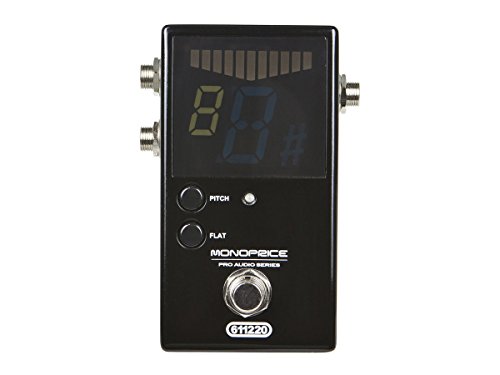
- Metal pedal housing for stage and pedalboard use
- One-cent accuracy across A0–C8
- Normal and true-bypass outputs with battery or adapter power
Best For: Value-focused players wanting a basic pedal tuner
Reliable Clip-On Choice
Fender FCT-2 Professional Tuner

- Vibration sensing for loud venues
- Color LCD needle display
- Modes for four instruments plus chromatic
Best For: Multi-instrument players needing a flexible clip-on tuner
Pedalboard Stage Pick
Guitar Tuner Pedal with True Bypass

- Bright color display for stage visibility
- True bypass signal routing
- A0-C8 range with flat-tuning support
Best For: Electric guitar and bass pedalboard setups
Flexible Headstock Option
D'Addario Eclipse Clip-On Tuner
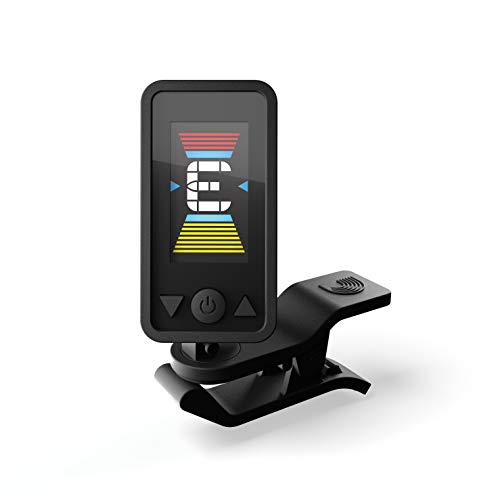
- Quick, accurate tuning response
- Full-color adjustable display
- Strong clamp with dual swivels
Best For: Players wanting flexible clip-on tuning for stage or rehearsal
Stage-Ready Pedal

- Bright color LCD for dark or sunny stages
- 430–450Hz calibration and four half-flat options
- Compact true-bypass aluminum pedal
Best For: Pedalboard users needing flexible, visible tuning
Quick Clip-On Pick

- Full-color display for tuning feedback
- Guitar and bass frequency range
- Clips to either side of the headstock
Best For: Portable, pedal-free stage tuning
Precision Stage Pedal
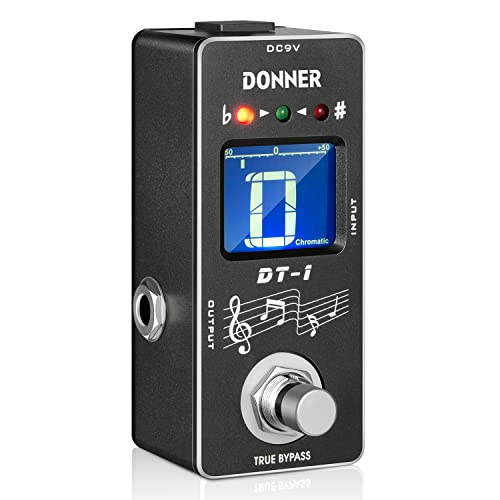
- A0–C8 wide tuning range
- ±1-cent fast strobe mode
- Stage-visible LED and LCD display
Best For: Players wanting precise pedal tuning for guitar or bass
Stage-Proven Precision – BOSS TU-3 Compact Chromatic Tuner
If you need a guitar tuner for stage use, the BOSS TU-3 combines a tank-tough stompbox design with a high-visibility 21-segment LED meter. Its +/- one-cent accuracy, automatic muting, and support for guitar, bass, and drop tunings make it a strong choice for live performers.
Best For: Guitarists and bassists who want a durable pedal tuner with excellent visibility and silent tuning.
Pros:
- High-brightness LED meter with adjustable brightness for varied lighting.
- Accurate to +/- one cent with Accu-Pitch visual confirmation.
- Supports 7-string guitars, 6-string basses, and drop tunings up to six semitones.
- Automatically mutes the signal while tuning.
Cons:
- Its stompbox format takes more pedalboard space than a clip-on tuner.
- Requires a 9V power source for operation.
The TU-3 is a polished live-performance option for players who prioritize visibility, rugged construction, and flexible tuning modes over minimal size.
Compact Board Specialist – OnStage GTP7000 Mini Guitar Tuner Pedal
The OnStage GTP7000 is a guitar tuner for stage setups where pedalboard space matters. Its oversized four-color display offers regular, strobe, and half-strobe modes, while true bypass helps preserve your signal when the tuner is not active.
Best For: Players building compact pedalboards who want a readable display and true-bypass operation.
Pros:
- Compact pedal format occupies minimal effects-board space.
- Oversized, high-visibility four-color display is easy to read.
- Offers regular, strobe, and half-strobe tuning modes.
- True bypass supports signal integrity when disengaged.
Cons:
- Requires a 9V DC adapter.
- Its tuning tolerance is listed as +/- 0.5 cent, but the supplied notes do not specify additional tuning features such as drop-tuning modes.
With its small footprint and flexible display modes, the GTP7000 is a practical fit for performers who want pedalboard integration without sacrificing stage readability.
Cable-Free Convenience – D'Addario Nexxus 360 Rechargeable Clip-On Tuner
For musicians who prefer a low-profile guitar tuner for stage use, the D’Addario Nexxus 360 offers clip-on convenience without disposable batteries. Its bright rotating display, strong clamp, and adjustable 415–465Hz calibration range make it easy to position and use in different performance environments.
Best For: Acoustic and electric players who want a rechargeable tuner with flexible viewing angles.
Pros:
- Provides up to 24 hours of tuning per charge.
- 360-degree rotating head and display support flexible viewing positions.
- Bright LED screen is designed for visibility in varied lighting.
- Strong clamp mounts securely on the headstock.
Cons:
- Clip-on placement may be less integrated with a pedalboard than a pedal tuner.
- Requires USB charging when the rechargeable battery is depleted.
The Nexxus 360 is a convenient stage companion for players who want quick, accurate tuning and a clear display without adding another pedal and patch cable.
Budget Pedal Workhorse – Monoprice Stage Right Chromatic Pedal Tuner
The Monoprice Stage Right is a practical guitar tuner for stage use that fits into a pedal rack and supports both normal and true-bypass outputs. Its heavy-duty metal construction, broad A0–C8 tuning range, and one-cent accuracy cover standard guitar and bass tuning needs.
Best For: Budget-conscious players who want a straightforward pedal tuner with flexible power options.
Pros:
- Heavy-duty metal construction with a pedalboard-friendly design.
- Normal and true-bypass 1/4-inch outputs provide connection flexibility.
- Covers A0 to C8 and is accurate to within one cent.
- Runs from a 9V battery or 9VDC adapter.
Cons:
- Battery and power adapter are sold separately.
- No warranty is listed in the supplied details.
- The supplied notes do not mention display brightness or advanced tuning modes.
This Stage Right tuner offers useful core features at a potentially accessible price, making it a sensible choice for players assembling a functional live pedalboard.
Reliable Clip-On Choice – Fender FCT-2 Professional Tuner
Fender FCT-2 Professional Multi-Instrument Clip-On Tuner for Guitar, Bass, Ukulele, and Violin
Check Price On AmazonFor a guitar tuner for stage use, the Fender FCT-2 offers vibration-based detection that stays dependable in loud venues and quiet rooms. Its responsive color LCD needle display makes pitch easy to check at a glance.
Best For: Guitarists who want one compact clip-on tuner for guitar, bass, ukulele, and violin.
Pros:
- Vibration sensing works effectively in noisy environments.
- Color LCD needle provides quick visual feedback.
- Supports dedicated guitar, bass, ukulele, violin, and chromatic modes.
- Dual-hinge clip allows flexible headstock positioning.
Cons:
- Uses a replaceable CR2032 battery rather than stage power.
- Molded plastic construction may be less rugged than a metal pedal.
With its broad B0-B7 range, A440 calibration, and included battery, the FCT-2 is a practical grab-and-go tuner for performers who want flexible, unobtrusive tuning.
Pedalboard Stage Pick – Guitar Tuner Pedal with True Bypass
This guitar tuner for stage setups connects directly to an electric guitar or bass and uses a bright color display for clear readings in dark venues or daylight. Its compact metal housing and true bypass design suit pedalboard-based rigs.
Best For: Electric guitar and bass players who prefer an always-connected pedal tuner with wide tuning and flat-tuning support.
Pros:
- Bright color LCD is easy to read in varied lighting.
- True bypass helps preserve the guitar signal when disengaged.
- Wide A0-C8 range and adjustable 435-445Hz calibration support varied setups.
- Metal chassis is compact and designed for regular stage use.
Cons:
- Requires a 9V DC adapter, which is not included.
- Designed around instrument cable input rather than a clip-on format.
The FTN-2 is the most integrated option here for players who tune through a pedalboard, especially those using drop or extended flat tunings.
Flexible Headstock Option – D'Addario Eclipse Clip-On Tuner
The D’Addario Eclipse is a straightforward guitar tuner for stage use, combining quick pitch detection with a full-color vertical screen. Its strong adjustable clamp and dual swivels help keep the display visible from different playing positions.
Best For: Guitar, bass, and ukulele players who want a compact clip-on tuner with flexible viewing angles.
Pros:
- Quick and accurate tuning response.
- Full-color screen offers flexible viewing from multiple angles.
- Strong clamp can mount in different headstock positions.
- 435-450Hz calibration range supports precise adjustment.
Cons:
- Uses a CR2 battery, adding a battery-specific replacement requirement.
- Its clip-on design may be less integrated than a pedal tuner.
With a swiveling display and firm clamp, the Eclipse is a convenient choice for performers who want fast, visible tuning without adding another pedal to the signal chain.
Stage-Ready Pedal – LEKATO Color Display Tuner
For a guitar tuner for stage use, the LEKATO pedal combines a bright color display with a compact, footswitch-controlled design. Its display is intended to remain visible in dark or sunny conditions, while true bypass helps preserve your guitar signal when tuning is complete.
Best For: Electric guitarists and bassists who want a pedalboard tuner with flexible calibration and flat-tuning options.
Pros:
- Color LCD display is designed for visibility in bright or dim settings.
- Pitch calibration adjusts from 430Hz to 450Hz, with four half-flat options.
- Compact aluminum housing, true bypass, and a durable footswitch suit regular performance use.
Cons:
- Requires a 9V DC power connection.
- Its listed tuning tolerance is approximately 0.499%, rather than the tighter specification offered by some dedicated strobe tuners.
The LEKATO is a practical stage pedal when screen visibility, quiet muting, and tuning flexibility matter more than adding effects. Its small footprint also leaves room for other pedals.
Quick Clip-On Pick – Snark SN5X Chromatic Tuner
The Snark SN5X is a compact clip-on option for musicians seeking a simple guitar tuner for stage use without adding a pedal to the signal chain. Its full-color display is tailored to guitar and bass and can be clipped to either the front or back of the headstock.
Best For: Guitarists, bassists, and violinists who prefer lightweight headstock-mounted tuning.
Pros:
- Full-color display is designed for clear tuning feedback.
- Frequency range is tailored to guitar and bass.
- Can be used on the front or back of the headstock and weighs only 1.58 ounces.
Cons:
- Clip-on placement may be less convenient than a pedal for players who prefer foot-controlled muting.
- Its plastic body may be less rugged than an aluminum pedal enclosure.
The SN5X is a convenient, low-profile choice for stage setups where portability and quick headstock access are priorities. It is especially useful when you want to avoid occupying pedalboard space.
Precision Stage Pedal – Donner DT-1 Chromatic Tuner
The Donner DT-1 is a guitar tuner for stage use with a broad A0-to-C8 tuning range, a fast strobe mode, and a color-and-brightness-adjusted LED display. Its tuning mode cuts the signal, while true bypass returns the guitar sound to the amplifier without reported pop or hum.
Best For: Electric guitar and bass players who want a visible pedal tuner with a wide range and ±1-cent strobe accuracy.
Pros:
- Wide A0–C8 tuning range supports guitar and bass applications.
- Strobe mode is specified at ±1 cent accuracy.
- Large-stage and outdoor visibility is supported by the adjusted LEDs and mini LCD screen.
Cons:
- Power adapter is not included.
- There is no battery compartment, so it requires an adapter.
The DT-1 is a strong fit for players who prioritize precise tuning feedback and a broad detection range. Budget for a compatible power adapter when planning the setup.
How We Picked the Best Guitar Tuner for Stage Use
We focused on the features that matter during rehearsals, gigs, and rapid instrument changes: tuning accuracy, note-detection speed, display visibility, bypass behavior, power options, durability, and ease of use. The selection includes dedicated pedal tuners, rechargeable clip-on models, and compact battery-powered tuners so players can match the format to their setup.
Pedal models are generally better for electric guitar and bass rigs because they can mute the signal while tuning. Clip-on tuners are more flexible for acoustic instruments, smaller boards, and situations where adding another pedal is inconvenient.
Quick Comparison
- Best for a traditional pedalboard: Choose a dedicated chromatic pedal with a clear display and dependable bypass.
- Best for portability: A clip-on tuner is quick to attach and does not require cables.
- Best for silent tuning: Look for a pedal with a mute function or tuner-out routing.
- Best for multiple instruments: Select a chromatic clip-on model with broad instrument support.
- Best for simple setups: A compact tuner with automatic note detection keeps setup fast and uncomplicated.
Key Buying Factors for a Guitar Tuner for Stage
Display Visibility
A stage tuner should be readable at a glance. Large LED or color displays are easier to see in dim venues, while strong contrast helps under bright stage lighting. Consider whether the display can be viewed from your normal standing position.
Mute and Bypass Behavior
Pedal tuners with mute capability let you tune without sending unwanted notes through the amplifier. True bypass can preserve the direct signal when the tuner is off, although the most important factor is reliable switching with no distracting pops or delays.
Power and Durability
Check whether the tuner uses a 9V battery, a standard pedal power supply, USB charging, or a combination. Rechargeable models reduce battery waste, while conventional pedal tuners may integrate more easily with an existing power brick. A sturdy footswitch and enclosure are worthwhile for frequent gigging.
Accuracy and Response
Fast note recognition matters when you have only a few seconds between songs. Chromatic operation is the most versatile choice, while stable tracking is especially important for low strings, bass, and noisy environments.
Who Should Buy Which Guitar Tuner for Stage?
Touring electric players should prioritize a rugged pedal tuner with a bright display, silent tuning, and dependable power compatibility. Acoustic guitarists and multi-instrumentalists will usually prefer a clip-on model that works without cables. Players with compact boards should look for a mini pedal or rechargeable tuner that occupies minimal space. Budget-conscious beginners can choose a straightforward chromatic tuner, provided its display is visible and its controls are easy to operate.
Before buying, confirm the tuner’s power requirements, bypass design, instrument compatibility, and display layout. The best Guitar Tuner for Stage performance is the one you can read instantly, activate quietly, and trust every time you step onstage.