Finding the right equalizer can make a church sound system easier to manage, especially when speech intelligibility, feedback control, and consistent music playback matter.
This roundup compares 10 graphic and digital EQ options, from straightforward dual-channel rack units to processors with spectrum displays and noise-reduction features.
Best 10 Audio Equalizers for Church Sound Systems Picks for 2026
Reliable Rack Control
dbx 231s Dual 31-Band Equalizer

- Dual 31-band constant-Q EQ
- Selectable 6 or 12 dB boost/cut
- XLR and 1/4-inch TRS I/O
Best For: Detailed dual-channel tuning in rack-based church PA systems
Feedback-Focused Tuning

- FBQ system identifies critical frequencies
- Dedicated mono subwoofer output
- Low-cut filter reduces floor rumble
Best For: Feedback control and subwoofer management during live church sound
Flexible Dual-Channel EQ
ART EQ355 Dual 31-Band Equalizer
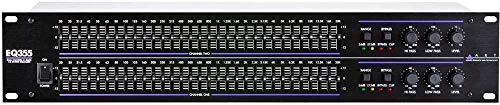
- Dual 31-band constant-Q circuitry
- High-pass and low-pass filters
- XLR, 1/4-inch, and RCA connections
Best For: Flexible dual-channel church rack installations
Integrated Signal Protection
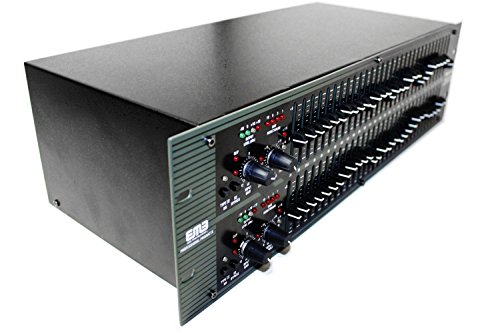
- Graphic EQ with built-in limiter
- Type 3 NR noise reduction
- Rackmount design for system integration
Best For: Church systems needing EQ plus peak and noise management
Versatile Signal Hub
EQ8100 20-Band Graphic Equalizer
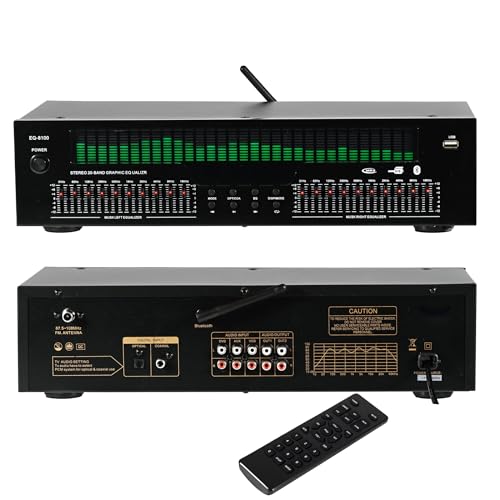
- 20-band EQ with 31-band spectrum display
- Optical, coaxial, USB, Bluetooth, and RCA connectivity
- Auto-save presets in a 1U aluminum chassis
Best For: Churches and live systems needing visual analysis and flexible connections
Hands-On Tone Shaping
EMB Professional EB631EQ Graphic Equalizer
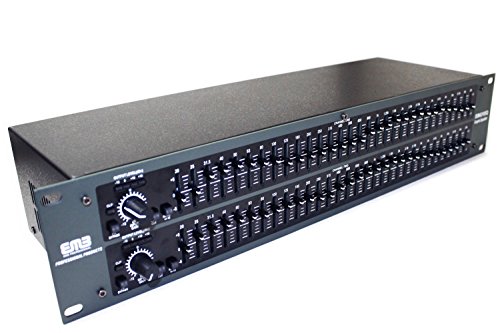
- Manual control of bass, midrange, and treble
- Useful for vocals, PA systems, and live events
- Metal and wood enclosure construction
Best For: Church teams wanting simple, direct tonal adjustments
Digital Venue Presets

- 31-band digital EQ with real-time spectrum display
- Noise reduction for cleaner audio processing
- Ten customizable presets with XLR and RCA connectivity
Best For: Church sound teams managing multiple rooms or recurring setups
Precision Rack Control
EQX-215S 15-Band Stereo Equalizer

- 15 bands per stereo channel
- Low-cut control for unwanted bass noise
- XLR, TRS, and adjustable bass output
Best For: Compact church racks needing practical stereo EQ control
Stage-Ready Processing
TKL T2531 31-Band Digital Equalizer

- Dual-channel 31-band DSP processing
- Stores and recalls 10 effects
- Automatic noise reduction with LED display
Best For: Church stages needing detailed EQ and repeatable settings
Connected Spectrum Control
EQ315 31-Band Digital Equalizer

- 31-band EQ with real-time LED spectrum display
- Bluetooth 5.2 and USB playback
- 10 presets plus bypass operation
Best For: Church systems combining EQ, visual monitoring, and music playback
Reliable Rack Control – dbx 231s Dual 31-Band Equalizer
For churches seeking audio equalizers for church sound systems, the dbx 231s offers detailed tonal control across two channels. Its dual 31-band, 1/3-octave constant-Q design is suited to making precise adjustments in a rack-based PA setup.
Best For: Church sound teams that need dual-channel, hands-on EQ control for balanced system tuning.
Pros:
- Provides dual 31-band equalization with 1/3-octave constant-Q bands.
- Offers selectable 6 dB or 12 dB boost/cut ranges.
- Includes front-panel bypass, input gain control, and four-segment LED output monitoring.
- Supports balanced XLR and 1/4-inch TRS connections.
Cons:
- Its 7.9-pound, 19-inch rack-format design requires suitable equipment space.
- It focuses on graphic EQ rather than additional limiter or noise-reduction processing.
The 231s is a practical choice when precise dual-channel equalization and straightforward level monitoring matter more than integrated processing features.
Feedback-Focused Tuning – FBQ1502HD
The FBQ1502HD is a useful option among audio equalizers for church sound systems when feedback identification and low-frequency cleanup are priorities. Its FBQ system highlights critical frequencies, while the dedicated subwoofer output and low-cut filter add system-management flexibility.
Best For: Church operators who want visual feedback-frequency detection, subwoofer integration, and rumble reduction.
Pros:
- FBQ Feedback Detection reveals problematic frequencies and can function as an audio analyzer.
- Dedicated mono subwoofer output includes an adjustable crossover frequency.
- Low-cut filtering helps remove unwanted low-frequency sounds such as floor rumble.
- Includes a two-year warranty according to the supplied details.
Cons:
- The supplied information identifies it as a 15-band equalizer, offering fewer bands than 31-band models.
- Its included feature and connector information is less focused on traditional balanced XLR/1/4-inch I/O than the other listed units.
Choose this model when fast feedback discovery and bass-management features are especially valuable during services or live events.
Flexible Dual-Channel EQ – ART EQ355 Dual 31-Band Equalizer
The ART EQ355 gives churches a versatile way to shape two audio paths with 31-band constant-Q equalization. For audio equalizers for church sound systems, its selectable filter options, multiple connections, and signal indicators make it adaptable to varied rack installations.
Best For: Church installations needing dual-channel EQ with flexible filtering, connectivity, and rack integration.
Pros:
- Uses dual 31-band constant-Q circuitry with 20 mm center-detent sliders.
- Provides selectable 6 dB or 12 dB boost/cut ranges.
- Includes adjustable high-pass and low-pass filters plus variable input level controls.
- Offers balanced XLR, 1/4-inch, and unbalanced RCA connections, along with clip indicators and ground lift.
Cons:
- Requires 2U of rack space and weighs approximately 7 pounds.
- Its extensive connection and filter options may be more than a simple single-channel setup requires.
- The supplied details describe analog operation without integrated feedback detection or limiter processing.
The EQ355 stands out for installations where connection flexibility and adjustable filtering are as important as detailed graphic EQ control.
Integrated Signal Protection – EMB Professional EB831EQ
The EMB Professional EB831EQ combines graphic equalization with limiter and Type 3 NR noise-reduction processing. For churches comparing audio equalizers for church sound systems, this rackmount processor is suited to setups that need tonal shaping alongside peak management and cleaner signal presentation.
Best For: Church, stage, and playback systems that benefit from EQ, limiter protection, and noise-reduction processing in one rack unit.
Pros:
- Combines graphic equalization and limiter functionality.
- Type 3 NR processing is designed to reduce audible background noise in compatible signal chains.
- Limiter processing helps control excessive peaks before they reach downstream equipment.
- Rackmount format fits organized installations with mixers, amplifiers, and other processors.
Cons:
- The supplied notes do not specify the number of EQ bands or connector types.
- At 13.67 pounds, it is heavier than the other listed equalizers with provided weights.
- Its broader processing feature set may be unnecessary when only basic graphic EQ is required.
The EB831EQ is a strong fit for users who want more than frequency adjustment, particularly when peak control and noise reduction are part of the signal-chain goals.
Versatile Signal Hub – EQ8100 20-Band Graphic Equalizer
For church sound systems that need flexible connectivity and visual feedback, the EQ8100 combines 20-band graphic control with a 31-band spectrum analyzer. Its optical, coaxial, USB, Bluetooth, and RCA-related connectivity makes it adaptable to several audio setups, while its display can help operators identify frequency changes during services or live events.
Best For: Churches, live stages, and rack-based systems needing broad connectivity, spectrum monitoring, and recallable EQ settings.
Pros:
- 20-band graphic equalization with a real-time 31-band spectrum display.
- Supports optical, coaxial, USB, Bluetooth, and analog/digital signal connections.
- Auto-save presets and 12 customizable modes can simplify switching between setups.
- Thin 1U aluminum chassis is suitable for portable or rack-mounted use.
Cons:
- The listed dimensions are unusually large and should be verified before rack installation.
- Its many inputs, modes, and display features may be more than a simple church PA requires.
The EQ8100 is a feature-rich option for churches balancing live sound control with multiple playback sources. It is especially appealing when visible spectrum analysis and saved configurations are useful parts of the operating workflow.
Hands-On Tone Shaping – EMB Professional EB631EQ Graphic Equalizer
The EMB Professional EB631EQ is a straightforward choice among audio equalizers for church sound systems when operators want hands-on control over bass, midrange, and treble. Its front-panel adjustment approach can help refine vocals, reduce harshness, and adapt a PA system to different rooms or programs.
Best For: Church PA setups, rehearsals, presentations, and live events where practical manual tone adjustment is the priority.
Pros:
- Provides adjustable graphic EQ control for shaping bass, midrange, and treble.
- Can help address harshness, improve vocal presence, and add low-frequency impact.
- Designed for PA, DJ, home stereo, car audio, and custom installation applications.
- Metal and wood enclosure construction is specified.
Cons:
- The supplied details do not specify the number of equalizer bands.
- Its listed tabletop mounting may require additional planning for a church rack or console.
- The specifications include mixed component details, so buyers should confirm the exact package and connections.
The EB631EQ suits buyers who prefer direct, uncomplicated tonal adjustments over advanced digital processing. Confirm its physical format and system compatibility before adding it to a permanent church audio installation.
Digital Venue Presets – RQG 31-Band Digital Equalizer
The RQG Audio Equalizer is built for church sound systems that need detailed frequency control and repeatable settings. Its 31-band digital EQ, real-time spectrum display, intelligent noise reduction, and ten preset modes can help operators tune different rooms, services, or performance configurations.
Best For: Churches and live-sound teams that frequently change venues or need saved EQ configurations for different audio sources.
Pros:
- Offers 31 adjustable frequency bands for detailed system tuning.
- Real-time spectrum analysis provides a visual reference for problem frequencies.
- Intelligent noise reduction is designed to reduce unwanted background noise while preserving clarity.
- Balanced XLR and unbalanced RCA connectors support integration with varied equipment.
Cons:
- The supplied notes do not state the unit’s rack size or physical dimensions.
- Digital controls and multiple presets may require operator familiarization.
- Only XLR and RCA connections are specified, which may limit direct compatibility with some systems.
With extensive band control and ten recallable presets, the RQG is a strong fit for churches managing recurring sound configurations. Its combination of spectrum visualization and noise reduction is particularly useful when consistent live-sound setup matters.
Precision Rack Control – EQX-215S 15-Band Stereo Equalizer
For church sound systems that need straightforward tonal shaping, the EQX-215S provides separate 15-band controls for each stereo channel. Its low-cut control, bypass operation, and rack-mount design make it practical for refining vocals, music, and overall system balance.
Best For: Churches seeking a compact, dual-channel graphic equalizer with flexible connections and dedicated low-frequency control.
Pros:
- 15 adjustable bands per channel with a stated ±12dB range.
- Low-cut feature helps reduce unwanted low-end noise.
- Offers XLR balanced and 1/4-inch TRS connections.
- Includes a dedicated bass output with adjustable frequency.
Cons:
- Provides fewer bands than the 31-band models in this roundup.
- Its 110V power specification may require compatibility checking.
The EQX-215S is a sensible choice when you want essential equalization controls without a more feature-heavy processor. Its dual-channel layout and connectivity suit many installed or rack-based church setups.
Stage-Ready Processing – TKL T2531 31-Band Digital Equalizer
The TKL T2531 is a 2U digital equalizer aimed at sound systems that benefit from detailed frequency adjustment. For church sound systems used in stage or performance settings, its dual-channel 31-band processing, noise reduction, and saved effects can support repeatable setups.
Best For: Larger church performance systems, worship stages, and operators who want extensive band control and recallable effects.
Pros:
- Provides dual-channel synchronous 31-band DSP processing.
- Can record and recall 10 effects.
- Includes automatic noise reduction and an LED display.
- Offers independent bass, midrange, and high-frequency adjustment.
Cons:
- The 2U rack format requires more rack space than a 1U unit.
- The supplied notes specify a 110V standard power configuration.
With 31 bands and effect recall, the T2531 is oriented toward detailed live-sound management rather than basic home playback. It may be especially useful where different worship or performance configurations need to be saved and recalled.
Connected Spectrum Control – EQ315 31-Band Digital Equalizer
The EQ315 combines 31-band equalization with real-time spectrum indication, preset storage, and multiple playback options. For church sound systems that also handle music playback, its Bluetooth 5.2 and USB features add flexibility alongside XLR and 1/4-inch TRS connectivity.
Best For: Churches wanting visual frequency monitoring, preset-based operation, and integrated wireless or USB music playback.
Pros:
- Provides 31-band control with LED spectrum indication.
- Includes 10 preset modes and an EQ bypass switch.
- Supports Bluetooth 5.2 and USB playback.
- Offers XLR balanced and 1/4-inch TRS inputs and outputs.
Cons:
- Its extra playback features may be unnecessary for systems using separate source equipment.
- The supplied notes do not specify the number of rack units.
The EQ315 stands out when operators value visual feedback and convenient source connectivity. Its bypass switch and preset support can also simplify testing and recurring service configurations.
How We Picked the Best Audio Equalizers for Church Sound Systems
We focused on the features that matter most in worship venues: usable frequency control, stereo or dual-channel operation, rack-mount practicality, visual feedback, noise management, and flexibility for microphones, instruments, playback, and installed PA systems. The selected models include traditional 15-, 20-, and 31-band graphic equalizers alongside newer digital processors with spectrum displays and additional processing functions.
Because church systems vary widely, we did not treat the highest band count or the longest feature list as automatically better. A simple, dependable equalizer may be easier for volunteers to operate, while a digital model may suit a technical team that wants more visual control and signal-shaping options.
Quick Comparison
| Best for | Look for | Recommended type |
|---|---|---|
| Speech intelligibility | Precise midrange adjustment and low noise | 31-band graphic EQ |
| Small worship spaces | Simple controls and dual-channel operation | 15- or 31-band analog EQ |
| Volunteer-friendly operation | Clear displays and straightforward presets | Digital EQ with spectrum display |
| Complex PA systems | Multiple bands, processing, and visual monitoring | Digital rack processor |
Key Buying Factors for Audio Equalizers for Church Sound Systems
Band Count and Frequency Control
More bands allow finer adjustments, which can help reduce feedback or improve vocal clarity without affecting the entire mix. A 31-band unit is a common choice for larger systems, while a 15- or 20-band model may be sufficient for a smaller room or simpler signal chain.
Channels and Signal Routing
Dual-channel equalizers can process left and right outputs, separate monitor mixes, or two independent sources. Confirm whether the unit supports the connections and routing your mixer, amplifier, powered speakers, or crossover requires.
Feedback, Noise, and Headroom
EQ cannot replace good microphone placement, speaker positioning, gain staging, and room treatment. Choose a unit with clean operation and enough headroom, then use narrow, moderate cuts rather than aggressive boosts. Noise-reduction features can help, but they should not be treated as a substitute for a clean signal path.
Displays and Ease of Use
Bright band markings, spectrum analyzers, and clear level meters can speed up troubleshooting. For volunteer-operated systems, intuitive controls may be more valuable than advanced processing that requires extensive training.
Installation and Durability
Check rack height, depth, ventilation, power requirements, and connector placement before buying. A sturdy rack unit is usually preferable for permanent installations or frequent transport between services and events.
Who Should Buy Which Audio Equalizers for Church Sound Systems?
Choose a traditional 31-band equalizer if you need familiar hands-on control for a main PA, monitor bus, or sanctuary installation. Choose a 15- or 20-band model for smaller rooms, basic tone shaping, or systems where fast setup matters more than fine adjustment.
Choose a digital processor with a real-time spectrum display if your team wants visual monitoring, broader configuration options, or more detailed control over a complex system. Models with built-in noise reduction may be useful for mixed home, DJ, and church applications, but verify that their controls remain practical for live worship use.
Before purchasing, map the signal chain and identify whether the equalizer will sit between the mixer and amplifier, on a monitor output, or in another position. The best choice is the one that matches your routing, operator skill level, and acoustic challenges—not simply the model with the most features.