The best DI boxes make it easier to connect instruments, laptops, and other unbalanced sources to mixers, interfaces, and PA systems. They can improve signal compatibility, reduce hum, and support cleaner long cable runs.
This roundup covers 10 DI boxes ranging from compact passive units to active stereo models, with options for musicians, presenters, home studios, and live-sound setups.
Best 10 Di Boxes Picks for 2026
Best Value Professional DI
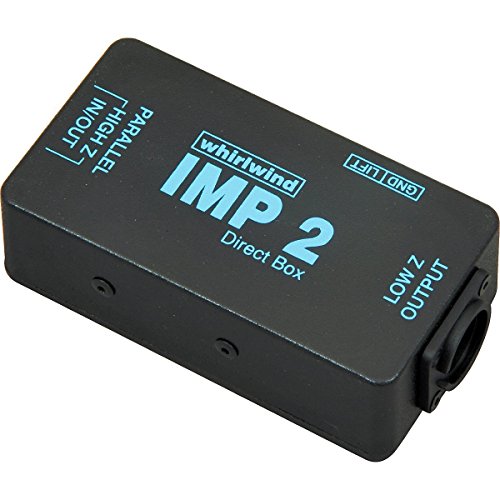
- Compact, economical design
- Balanced mic-level output
- Riveted TRHL transformer
Best For: Musicians needing a durable single-channel passive DI
Best Budget Feature Set

- No power required
- Pad and ground-lift switches
- 1/4-inch and XLR connectivity
Best For: Guitarists and keyboard players needing simple passive routing
Simple Signal Control

- Passive impedance transformer for instrument and line-level sources
- Ground lift and hum-cancellation functionality
- Connects guitars, basses, keyboards, and consumer stereo outputs
Best For: Budget-conscious musicians and basic live or recording setups
Flexible Stereo Power
Bolanle J22 Active Stereo DI Box

- Runs on phantom power, 9V battery, or 5V USB
- Dual channels retain stereo separation
- Ground lift and polarity reversal controls
Best For: Keyboardists and performers needing stereo connectivity and flexible power
Tour-Ready Passive Performance
Radial ProDI Passive DI Bundle

- Custom transformer handles high signal levels
- Transformer isolation helps reduce ground-loop noise
- Includes Pig Hog mic cable and polishing cloth
Best For: Performers and studios wanting a simple, bundled passive DI setup
Versatile Two-Channel DI

- Two-channel design for flexible setups
- Supports instruments, processors, and consumer audio
- Steel chassis with ground-lift functionality
Best For: Musicians and small live-sound rigs needing two channels
Best Value Professional DI – Whirlwind IMP 2
If you need reliable di boxes without a large footprint or high cost, the Whirlwind IMP 2 is a practical choice. Its passive transformer converts an unbalanced line- or instrument-level signal to a low-impedance, balanced mic-level signal for professional audio setups.
Best For: Musicians and audio users who want a compact, durable, economical passive direct box.
Pros:
- Compact design with a useful footprint
- Converts unbalanced instrument or line signals to balanced mic level
- Uses a riveted Whirlwind TRHL transformer for durability
- Offers professional-quality performance at an economical price
Cons:
- Single-channel design
- Passive operation may not suit setups requiring active DI features
The IMP 2 stands out when dependable signal conversion and rugged construction matter more than added controls or multiple channels.
Best for Packing and Storage – The Boxery 12-Inch Boxes
Although these are shipping cartons rather than audio di boxes, The Boxery 12-inch corrugated boxes are a useful option for organizing, moving, mailing, or storing equipment and supplies. The 25-pack provides a cost-effective supply of recyclable cardboard boxes.
Best For: Home, office, and business packing, moving, shipping, and storage needs.
Pros:
- Includes 25 stackable 12-by-12-by-12-inch boxes
- Made from recycled, recyclable corrugated cardboard
- Designed for moving, shipping, packing, and storage
- Quick to assemble and economical for larger packing jobs
Cons:
- Not an audio direct box or signal-conversion device
- Rated breaking strength is 40 pounds
This pack makes sense for general-purpose packing, but shoppers specifically seeking audio di boxes should consider one of the dedicated direct boxes instead.
Best Budget Feature Set – Yovus DB-1 Passive DI
The Yovus DB-1 is a straightforward passive option among di boxes, with 1/4-inch input and through jacks, an XLR output, a pad switch, and a ground lift. It is designed to connect instruments such as guitars and keyboards to balanced audio systems without requiring power.
Best For: Guitar and keyboard users who need basic passive signal routing and ground-loop noise control.
Pros:
- Requires no power
- Includes 1/4-inch input and through jacks
- Pad switch helps manage hot sources
- Ground lift can help reduce buzz from electrical grounding issues
Cons:
- Single-channel output
- Basic passive feature set
With useful controls in a compact metal enclosure, the DB-1 is a sensible pick for simple instrument-to-balanced-output applications.
Best for AV Ground-Loop Control – Radial Pro AV1
The Radial Engineering Pro AV1 is a passive direct box built for multimedia, audio, and video applications. Among these di boxes, it is especially suited to setups where reducing buzz and hum from ground loops is important, while its design is also intended to handle large transients without distortion.
Best For: Multimedia, audio, and video systems that need passive isolation and ground-loop noise reduction.
Pros:
- Designed for multimedia, audio, and video use
- Helps eliminate buzz and hum from ground loops
- Handles large transients without distortion
- Includes a three-year warranty
Cons:
- Passive design does not provide active DI features
- May be more specialized than needed for basic instrument use
The Pro AV1 is a strong fit when clean, dependable AV signal handling and ground-loop control are higher priorities than a broad set of extra controls.
Simple Signal Control – Pyle Premium Passive DI Box
For musicians comparing di boxes on a budget, the Pyle Premium Direct Injection Audio Box is a practical passive option for connecting unbalanced instruments and line-level sources to balanced or unbalanced equipment. Its impedance transformer, input attenuation, and ground-lift functionality are aimed at cleaner signal routing and hum reduction.
Best For: Guitarists, bassists, keyboard players, and home-recording users who need a compact passive DI and hum eliminator.
Pros:
- Connects guitars, basses, keyboards, processors, and other unbalanced sources.
- Transformer-based design helps cancel buzz and hum.
- Ground-lift adapter and input attenuation support flexible signal matching.
- Can also connect consumer stereo or boombox line outputs for sampling.
Cons:
- Passive design does not offer the multiple power options of an active DI.
- Its feature set is more basic than a dual-channel professional unit.
This Pyle model makes sense when you need straightforward connectivity and basic noise control without a complicated setup. It is especially useful for simple live or recording rigs built around one or more unbalanced sources.
Flexible Stereo Power – Bolanle J22 Active Stereo DI Box
Among di boxes, the Bolanle J22 stands out for musicians who need stereo operation and flexible power. This active dual-channel unit supports 48V phantom power, a 9V battery, or 5V USB power, making it adaptable to stages, studios, rehearsals, and setups without dependable phantom power.
Best For: Keyboardists, synth players, and performers running two instruments or stereo outputs into a PA or recording system.
Pros:
- Offers 48V phantom, 9V battery, and 5V USB power options.
- Two channels preserve stereo separation through dual XLR outputs.
- Ground lift and polarity reversal controls help manage routing and interference.
- Metal housing is designed for stage and touring use.
Cons:
- Batteries are not included.
- At 2.03 pounds, it is heavier than a very minimal single-channel DI.
The J22 is a strong choice when one compact box needs to handle stereo signals and changing power conditions. Its controls and connection options provide more flexibility than a basic passive DI, particularly for keyboard-centered rigs.
Tour-Ready Passive Performance – Radial ProDI Passive DI Bundle
For shoppers seeking performance-focused di boxes, the Radial Engineering ProDI Bundle pairs a passive instrument direct box with a Pig Hog microphone cable and polishing cloth. Its custom-wound transformer and 140kΩ input impedance are designed to handle high signal levels while supporting clean, practical stage or studio connections.
Best For: Performers and recording users who want a plug-and-play passive DI with transformer isolation and a bundled cable.
Pros:
- Custom-wound transformer is designed to handle extreme signal levels without distortion across frequencies.
- Transformer-isolated output helps reduce ground-loop noise.
- High 140kΩ input impedance is suited to instrument signals.
- Bundle includes a Pig Hog microphone cable and cleaning cloth.
Cons:
- Passive design does not provide active DI power options.
- The bundle may be more than needed if you already have suitable cables.
The ProDI Bundle is a straightforward option for users who prioritize transformer isolation, high input impedance, and rugged touring-oriented accessories. It offers simple plug-and-play operation for stage or studio signal paths.
Versatile Two-Channel DI – Pyle-Pro PDC22
The Pyle-Pro PDC22 is a practical choice when you need flexible DI boxes for instruments, keyboards, processors, or consumer audio sources. Its two-channel steel design includes ground-lift functionality to help address hum and unwanted noise in live or recording setups.
Best For: Musicians and small live-sound or recording rigs needing two channels and broad source compatibility.
Pros:
- Two channels support multiple instruments or signal sources.
- Works with keyboards, guitars, basses, processors, and consumer stereo outputs.
- Ground-lift and hum-cancellation functionality can help provide cleaner audio.
- Heavy-duty steel chassis is built for regular use.
Cons:
- Its broader feature set may be more than needed for a simple one-source setup.
- The listed design includes a detachable AC power cord, so it may be less streamlined than fully passive alternatives.
Choose the PDC22 if versatility and two-channel connectivity matter more than having the smallest possible DI box. It is especially useful for setups that combine instruments with line-level or consumer audio sources.
Laptop-Friendly Passive DI – On-Stage DB100
The On-Stage DB100 is one of the most straightforward DI boxes for connecting a laptop, tablet, or MP3 player to a professional audio system. Its 3.5 mm input, integrated 10-foot cable, and passive operation keep the setup simple without requiring a power supply.
Best For: Presenters, DJs, and small AV setups connecting consumer playback devices to mixers or PA systems.
Pros:
- 3.5 mm plug works with common laptops, tablets, and MP3 players.
- Converts an unbalanced input to a balanced, mic-level output.
- Integrated 10-foot cable makes it easier to reach distant audio sources.
- Passive design does not require a power supply.
Cons:
- Single-channel design is less suitable for multi-source setups.
- Its intended compatibility centers on 3.5 mm consumer audio devices rather than instrument inputs.
The DB100 is a focused solution for playback and presentation systems. If you primarily need to send audio from a portable device to a mixer or PA, its long integrated cable and passive design make it convenient to deploy.
Compact Stereo Device DI – Kopul LT-PDI
The Kopul LT-PDI is a compact option for routing stereo line-level audio from laptops, smartphones, and tablets into professional systems. These DI boxes convert the unbalanced source to a balanced mono mic-level signal, while the ground-lift switch helps address hum during live, studio, or AV use.
Best For: Mobile sound engineers and AV users connecting portable stereo devices to PA systems, mixers, or recorders.
Pros:
- Accepts stereo line-level signals from laptops, smartphones, and tablets.
- 3.5 mm TRS input and XLR output suit common audio-system connections.
- Ground-lift switch helps reduce hum and unwanted interference.
- Lightweight aluminum construction is easy to carry in a gear bag.
Cons:
- The output is balanced mono, so it does not preserve a stereo output path.
- Its single-channel format may not suit users needing separate dual-channel connections.
The LT-PDI makes sense when portability and device compatibility are priorities. It is particularly well suited to mobile AV work where a compact build, long cable-run support, and ground-lift control are useful.
How We Picked These Di Boxes
We selected these Di Boxes based on connection flexibility, passive or active design, channel count, power options, portability, and suitability for common use cases. The lineup includes straightforward instrument boxes, laptop-focused models, stereo units, and options with attenuation or ground-lift features.
We also considered whether each model addresses a specific setup problem, such as connecting a guitar to a mixing console, sending a laptop’s stereo output to a PA, or isolating a noisy signal. A simple passive unit may be all many users need, while more demanding sources can benefit from active circuitry and additional headroom.
Quick Comparison
- Best for basic instrument routing: A passive single-channel DI with 1/4-inch input and XLR output.
- Best for laptops and playback devices: A laptop DI with suitable stereo or dual-channel connectivity.
- Best for keyboards and stereo sources: A dual-channel or stereo DI box.
- Best for flexible power: An active model supporting phantom power, batteries, USB, or multiple power sources.
- Best for difficult live environments: A rugged box with transformer isolation, ground lift, and dependable connectors.
Key Buying Factors for Di Boxes
Passive Vs. Active Design
Passive Di Boxes typically use transformer-based circuitry and do not require external power. They are simple, durable, and often a good match for active instruments or strong line-level signals. Active models require phantom power, batteries, USB, or another power source, but can provide more gain, input flexibility, and better results with passive pickups or weaker sources.
Inputs, Outputs, and Channel Count
Check whether you need a 1/4-inch instrument input, stereo inputs, RCA or 3.5mm connectivity, or a combination of formats. A single-channel box suits most guitars and basses. Stereo or dual-channel models are better for keyboards, laptops, DJ gear, and playback devices where preserving left and right channels matters.
Ground Lift, Attenuation, and Isolation
A ground-lift switch can help address hum caused by connected equipment, while input attenuation prevents clipping from hot signals. Transformer isolation is especially useful in live rigs and complex studio setups. These controls are not always necessary, but they can make troubleshooting much easier.
Build Quality and Portability
For gigging, prioritize a sturdy enclosure, reliable jacks, clear controls, and a footprint that fits your pedalboard or stage setup. If the DI box will stay in a rack or studio, connectivity and signal handling may matter more than compact size.
Who Should Buy Which Di Boxes?
Guitarists and bassists should generally choose a durable passive DI unless the instrument has a weak passive pickup or requires extra gain. Keyboard players and laptop users should look for stereo or dual-channel connectivity to avoid collapsing a stereo signal unnecessarily. Home-studio users may prefer active models with flexible power and attenuation controls. Live performers and presenters should prioritize ground lift, isolation, rugged construction, and easy setup over unnecessary features.
Before buying, confirm the source output, the mixer or interface input, required cable types, and whether phantom power is available. Matching those details to the DI box will usually matter more than choosing the most feature-heavy model.