Staying in tune is essential for clean chords, accurate recording, and confident performance. The right tuner for an electric guitar should be easy to read, responsive to low notes, and convenient for your setup.
This roundup compares 10 popular clip-on, rechargeable, and pedal-style options so you can choose a tuner that fits your practice routine, pedalboard, and budget.
Best 10 Guitar Tuners for Electric Guitars Picks for 2026
Reliable Color Feedback

- Full-color display
- Guitar and bass frequency range
- Front- or back-of-headstock use
Best For: Players wanting simple visual tuning feedback
Discreet Precision
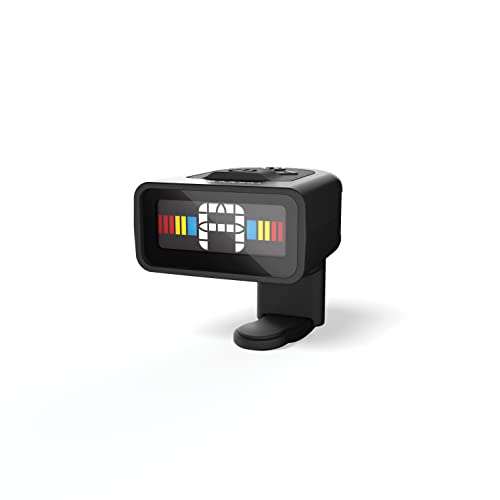
- Compact behind-headstock design
- Piezo vibration sensing
- Tri-color backlit screen
Best For: Players prioritizing a low-profile tuner
Flexible Fender Design
Fender FT-1 Professional Tuner

- Dual-rotating hinges
- Full-range chromatic tuning
- Green in-tune LCD backlight
Best For: Players needing adjustable viewing angles
Large Adjustable Display
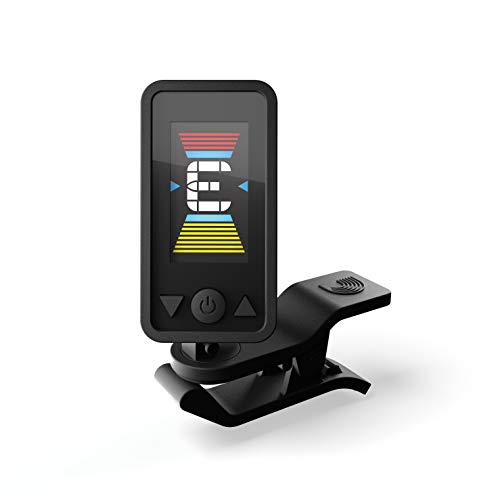
- Vertical full-color screen
- Dual swivels for flexible viewing
- Strong adjustable headstock clamp
Best For: Players who value visibility and secure mounting
Stage-Ready Pedal
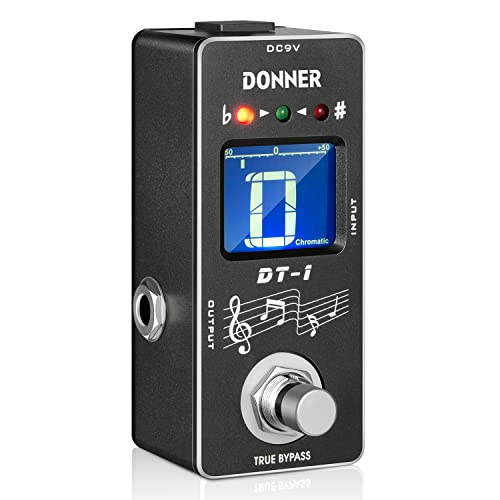
- Pedal tuner with tuning and bypass modes
- A0–C8 range with strobe mode
- Bright display for stage visibility
Best For: Electric guitarists using a pedalboard
Rechargeable Convenience

- Up to 24 hours per charge
- 360-degree rotating screen and clamp
- Adjustable 415–465Hz calibration
Best For: Players wanting a rechargeable clip-on tuner
Multi-Instrument Clip-On
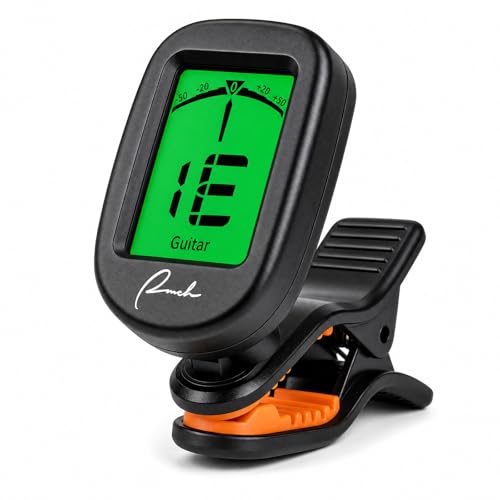
- Modes for guitar, bass, and other instruments
- Vibration-based sensing for noisy settings
- Includes CR2032 battery and rotating display
Best For: Multi-instrument players needing a compact tuner
Best Rechargeable Color-Screen Pick

- Vivid color screen
- USB-C rechargeable battery
- Open and multi-instrument tuning
Best For: Players wanting a rechargeable tuner with flexible viewing
Best Simple All-Purpose Pick

- Quick vibration-based tuning
- Works with multiple stringed instruments
- Three-minute automatic shutoff
Best For: Players wanting a basic, flexible clip-on tuner
Best Feature-Rich Battery Pick

- Six instrument modes plus chromatic
- Rotating LCD and universal clip
- Includes CR2032 battery and four picks
Best For: Multi-instrument players wanting dedicated tuning modes
Reliable Color Feedback – Snark SN5X
For players comparing guitar tuners for electric guitars, the Snark SN5X offers a straightforward clip-on design with a full-color display and a frequency range tailored to guitar and bass. Its headstock clip can be positioned on either the front or back.
Best For: Electric and bass guitar players who want a simple, colorful clip-on tuner.
Pros:
- Full-color display is easy to reference while tuning.
- Frequency range is tailored to guitar and bass.
- Can be used on the front or back of the headstock.
- Lightweight 1.58-ounce design.
Cons:
- Plastic body may feel less substantial than metal alternatives.
- Its listed tuning range is specifically tailored to guitar and bass rather than broadly described for many instruments.
The SN5X focuses on the essentials: visible tuning feedback, flexible headstock placement, and a guitar-and-bass-oriented range. It is a practical choice for routine practice and setup checks.
Discreet Precision – D'Addario NS Micro Tuner
Among guitar tuners for electric guitars, the D’Addario Micro Headstock Tuner stands out for its compact, discreet design. It uses a piezo transducer to detect instrument vibration, so it can tune quietly without relying on room sound.
Best For: Electric guitarists who want an unobtrusive tuner that can stay on the instrument.
Pros:
- Compact design hides behind the headstock.
- Piezo transducer detects vibration for quiet tuning.
- Tri-color display shows out-of-tune, close, and in-tune status.
- 360-degree swivel and adjustable padded clamp support flexible positioning.
Cons:
- Very small form factor may be less convenient for players who prefer a larger display.
- The supplied notes list conflicting battery descriptions, so battery details should be verified before purchase.
The NS Micro is built around discretion and precise vibration sensing. Its tiny footprint and flexible clamp make it especially suitable for players who prefer leaving a tuner attached during storage or performance preparation.
Flexible Fender Design – Fender FT-1 Professional Tuner
The Fender FT-1 Professional is a versatile option among guitar tuners for electric guitars, with a full-range chromatic design, dual-rotating hinges, and an LCD display. A backlight turns green when the note is in tune, making status easy to read.
Best For: Electric, acoustic, and bass players who want flexible positioning and a clear LCD tuning display.
Pros:
- Dual-rotating hinges allow flexible placement and viewing.
- Full-range chromatic tuning supports guitar and bass use.
- LCD tuning needle and backlight indicate pitch status clearly.
- CR2032 battery is included, with a limited warranty noted in the supplied information.
Cons:
- Plastic construction may not feel as rugged as a metal-bodied tuner.
- The supplied notes mention both a one-year and two-year limited warranty, so the current coverage should be confirmed.
The FT-1 Professional balances broad instrument suitability with easy positioning. Its dual hinges and green in-tune backlight are useful when the tuner needs to remain visible from different playing angles.
Large Adjustable Display – D'Addario Eclipse Tuner
The D’Addario Eclipse is a strong contender for guitar tuners for electric guitars when visibility and secure mounting matter. It combines a large vertical full-color display with dual swivels and a clamp designed to mount firmly anywhere on the headstock.
Best For: Electric guitarists who want a highly adjustable screen and a strong clip-on clamp.
Pros:
- Large vertical full-color display supports easy reading.
- Dual swivels provide flexible viewing angles for left- or right-handed players.
- Strong clamp is designed to mount securely on the headstock.
- Adjustable calibration range is listed as 435-450Hz.
Cons:
- At 1.44 ounces, it is not the lightest option in this roundup.
- The supplied notes list a CR2 battery while also describing the battery type as lithium ion, so battery specifications should be checked.
The Eclipse emphasizes fast, readable tuning with flexible positioning. Its screen and clamp design make it a practical choice for players who want clear feedback without handling a separate pedal or handheld tuner.
Stage-Ready Pedal – Donner DT-1 Chromatic Tuner
For players comparing guitar tuners for electric guitars, the Donner DT-1 is a compact pedal designed for clear, fast tuning before or between songs. Its chromatic range covers standard guitar and bass applications, while the bright display is intended to remain visible on stages and outdoors.
Best For: Electric guitarists who prefer a pedalboard tuner with signal muting and true bypass.
Pros:
- Offers tuning and bypass modes, including signal cutoff while tuning.
- Supports A0–C8 and a strobe mode rated at ±1-cent accuracy.
- Bright LED indicators and LCD screen suit stage or outdoor use.
- Compact pedal format with true bypass and no reported pop or hum.
Cons:
- Requires a 9V adapter, which is not included.
- Has no battery compartment.
The DT-1 makes the most sense for electric players who want hands-free pedal operation and quiet signal muting. Budget separately for the required power adapter.
Rechargeable Convenience – D'Addario Nexxus 360 Tuner
The D’Addario Nexxus 360 is a practical choice among guitar tuners for electric guitars when you want clip-on simplicity without regularly replacing batteries. Its rotating head, large bright screen, and vibration-responsive clamp make it easy to position on a headstock.
Best For: Electric or acoustic players who want a rechargeable clip-on tuner with flexible viewing angles.
Pros:
- Provides up to 24 hours of tuning per charge.
- 360-degree rotating display and clamp support varied viewing positions.
- Bright LED screen is designed for visibility in different lighting conditions.
- 415–465Hz calibration range supports adjustable tuning references.
Cons:
- Requires USB charging rather than a replaceable battery.
- Its clip-on format may be less convenient than a pedal for hands-free muting during performances.
Choose the Nexxus 360 if rechargeable operation and positioning flexibility matter more than pedalboard integration. The strong clamp and adjustable calibration add useful versatility for practice and performance.
Multi-Instrument Clip-On – Ranch Chromatic Tuner
The Ranch tuner is a straightforward option for shoppers comparing guitar tuners for electric guitars and other string instruments. Its vibration-based sensor, rotating display, and included CR2032 battery make it ready for quick tuning at home, in rehearsal, or on stage.
Best For: Players who tune multiple string instruments and want one compact, battery-powered clip-on tuner.
Pros:
- Supports guitar, bass, ukulele, violin, banjo, mandolin, and chromatic modes.
- Piezo vibration sensing helps it read notes in noisy environments.
- 360-degree display and green backlight improve viewing flexibility.
- Includes a CR2032 battery and protective silicone padding.
Cons:
- Uses a replaceable coin-cell battery rather than rechargeable power.
- Its plastic clip-on design is less suited to players specifically seeking a pedal tuner.
The Ranch is a useful all-purpose choice for musicians who switch between instruments. Its multiple modes and vibration sensing provide practical flexibility, while the included battery lets you start tuning immediately.
Best Rechargeable Color-Screen Pick – New Bee GT30
For shoppers comparing guitar tuners for electric guitars, the New Bee GT30 stands out with a vivid color display, vibration-based tuning support, and a rechargeable design. Its rotatable screen and padded clamp make it convenient for practice, studio work, or stage use.
Best For: Players who want a rechargeable clip-on tuner with an easy-to-read color screen.
Pros:
- High-resolution color display improves note visibility in different lighting.
- Supports electric and acoustic guitar, bass, ukulele, violin, cello, chromatic, and open guitar tuning.
- 360° rotating screen and silicone-padded clamp offer flexible viewing and secure mounting.
- USB-C rechargeable battery provides up to 10 hours of tuning.
Cons:
- Plastic construction may feel less premium than metal-bodied tuners.
- Its rechargeable battery requires periodic USB-C charging.
The GT30 is a practical choice if you prefer avoiding disposable batteries and want a display that is easy to position. Its broad instrument support also makes it useful for multi-instrument players.
Best Simple All-Purpose Pick – SH03 Clip-On Tuner
Guitar Tuner Clip On 1 Pack Tuners for Acoustic Electric Guitar Bass Ukulele Violin banjo Tuning
Check Price On AmazonThis SH03 is a straightforward option for shoppers seeking guitar tuners for electric guitars and other stringed instruments. Its vibration sensor is designed to respond quickly, while the 360° rotatable screen helps you read tuning information from a comfortable angle.
Best For: Guitarists who want an uncomplicated clip-on tuner for regular practice and playing.
Pros:
- Quick, accurate vibration-based tuning can work in noisy surroundings.
- Compatible with electric and acoustic guitars, bass, ukulele, violin, banjo, and other stringed instruments.
- 360° rotatable screen makes the display easier to view.
- Automatic shutoff after three minutes helps conserve battery life.
Cons:
- The supplied notes do not specify a rechargeable battery or USB charging.
- Plastic construction may not appeal to shoppers seeking a premium build.
With its broad compatibility and simple automatic shutoff, the SH03 is well suited to everyday tuning without extra features or complicated controls. It is a sensible basic pick for home practice or a gig bag.
Best Feature-Rich Battery Pick – AARVI AV-01
The AARVI AV-01 is a versatile choice among guitar tuners for electric guitars, especially for players who also use several other stringed instruments. It combines dedicated tuning modes, a rotating LCD display, automatic shutoff, and four included guitar picks.
Best For: Multi-instrument players who want dedicated modes and useful accessories in one compact package.
Pros:
- Six instrument modes plus chromatic tuning cover electric guitar, acoustic guitar, bass, violin, banjo, and ukulele.
- High-sensitivity vibration sensor supports fast tuning in noisy environments.
- 360° rotating display and universal clip accommodate different viewing angles and headstocks.
- Includes a CR2032 battery and four guitar picks.
Cons:
- Uses a replaceable CR2032 battery rather than a rechargeable battery.
- Automatic shutoff occurs after three minutes of inactivity, which may interrupt extended idle periods.
The AV-01 offers more dedicated modes than a basic chromatic tuner and remains compact at 0.634 ounces. Its included picks add practical value for guitarists building or refreshing their accessory kit.
How We Picked the Best Guitar Tuners for Electric Guitars
We focused on the features that matter most in everyday tuning: chromatic accuracy, display readability, response speed, mounting stability, power options, and compatibility with electric guitars and basses. We also included several form factors, from discreet headstock models to a true-bypass pedal tuner for players who tune onstage.
Because product specifications and user needs vary, consider this list a practical starting point rather than a substitute for checking current pricing, warranty terms, and compatibility before buying.
Quick Comparison
| Tuner type | Best suited for | Main advantage |
|---|---|---|
| Clip-on chromatic | Practice, lessons, and casual playing | Portable and simple to use |
| Rechargeable clip-on | Frequent players | Reduces disposable battery use |
| Pedal tuner | Live electric-guitar rigs | Fast hands-free tuning between songs |
Key Buying Factors for Guitar Tuners for Electric Guitars
Detection and Accuracy
Look for a chromatic tuner that detects the full range of your instrument and responds quickly to plucked notes. Bass players or guitarists using lower tunings should pay particular attention to low-frequency tracking.
Display and Viewing Angle
A bright, high-contrast display is easier to read under rehearsal or stage lighting. Rotating hinges and 360-degree screens help when the tuner is mounted behind the headstock or viewed from an unusual angle.
Clip Stability and Size
The clip should grip securely without marking the headstock. Compact tuners are less noticeable, while larger screens may be preferable if you have difficulty reading small indicators.
Power and Controls
Battery-powered models are convenient for a gig bag; rechargeable tuners can be more economical for frequent use. Check charging time, automatic shutoff, button placement, and whether the tuner remains usable while plugged in.
Pedalboard Integration
A pedal tuner is usually the better choice for amplified performance. True bypass can help preserve your signal when the tuner is off, while a dedicated output and clear pitch indicator make silent tuning quick and practical.
Who Should Buy Which Guitar Tuners for Electric Guitars?
Choose a basic clip-on tuner if you want the lowest-cost, most portable option for home practice, lessons, or occasional gigs. These models work well for most electric guitars when the instrument is unplugged.
Choose a rechargeable clip-on if you play regularly and want to avoid keeping spare coin batteries on hand. Prioritize battery life and a charging indicator if you rely on it for rehearsals or travel.
Choose a pedal tuner if you perform with an electric guitar and need silent, hands-free tuning between songs. It takes more pedalboard space but is typically easier to operate in a live setup.
For the best match, compare the tuner’s mounting design with your headstock, confirm support for your lowest tuning, and select the clearest display you can comfortably read.