The best pedal guitar tuners make tuning faster, quieter, and easier to manage between songs. They give guitarists and bassists a dedicated footswitchable solution for muting the signal, checking pitch, and keeping a pedalboard organized.
This roundup compares 10 pedal tuners across precision, display visibility, bypass design, power requirements, and overall practicality, from proven stage models to budget-friendly options.
Best 10 Pedal Guitar Tuners Picks for 2026
Stage-Ready Standard

- Bright 21-segment display
- One-cent tuning accuracy
- Supports drop tunings and multiple instruments
Best For: Gigging guitarists and bassists
Precision Display Pick

- Full-color display
- Works with guitar and bass
- Includes Micro USB and 1/4-inch TS connections
Best For: Players wanting a color-display pedal tuner
Premium Signal Path

- 21-segment blue LED meter
- Premium buffer with true-bypass option
- TU-3-equivalent tuning performance
Best For: Players wanting tuning and signal-path flexibility
Compact Board Saver

- Compact pedalboard footprint
- Needle and strobe display modes
- Includes power supply
Best For: Space-conscious guitarists and bassists
Budget Precision Pick
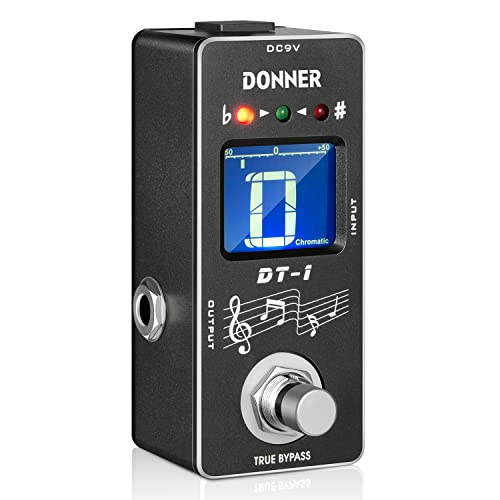
- A0–C8 range for guitar and bass
- Fast strobe mode rated ±1 cent
- Bright display with mute or bypass modes
Best For: Budget-minded players needing a visible, adapter-powered tuner
Compact Live Rig Choice
Electro-Harmonix 2020-2.0 Tuner
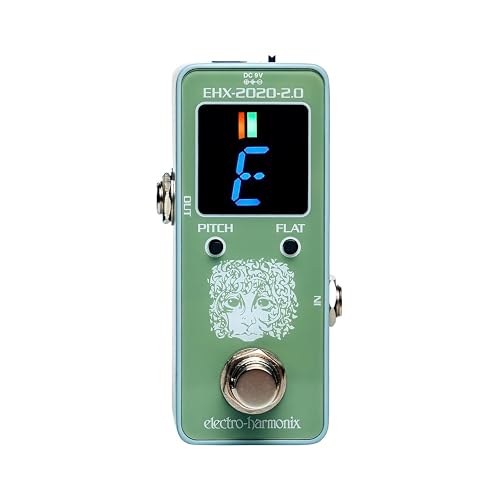
- Compact 3.75-inch pedalboard footprint
- Switchable true or buffered bypass
- Mutes output during tuning
Best For: Live performers prioritizing compact size and silent tuning
Flexible Power Pick
Monoprice Stage Right Chromatic Tuner
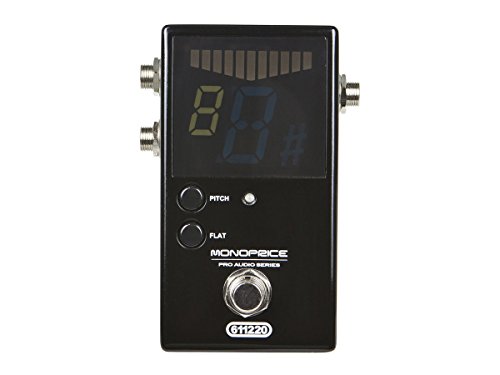
- A0–C8 range with 1-cent accuracy
- Heavy-duty metal construction
- Runs on 9V battery or adapter
Best For: Guitarists and bassists wanting broad coverage and power flexibility
Most Customizable

- Six tuning modes, including Strobe and Needle
- Rotating display for flexible pedalboard placement
- Presets, capo tunings, and multiple bypass modes
Best For: Players wanting extensive tuning and display customization
Best Display

- Bright color LCD for stage or outdoor use
- 430Hz–450Hz pitch calibration
- Half-flat settings and true bypass
Best For: Players who need clear tuning feedback in varied lighting
Best Precision Value

- ±1-cent tuning precision
- A0–C8 tuning range with mute mode
- True bypass and clear LED display
Best For: Players wanting accurate, no-frills chromatic tuning
Stage-Ready Standard – BOSS TU-3
The BOSS TU-3 is a practical choice for players who need a dependable pedal guitar tuner for rehearsals, gigs, and outdoor stages. Its bright 21-segment display, one-cent accuracy, automatic muting, and support for guitar, bass, and drop tunings make it a versatile pedalboard staple.
Best For: Gigging guitarists and bassists who prioritize visibility, durability, and flexible tuning modes.
Pros:
- High-brightness 21-segment LED meter remains visible in challenging lighting.
- Accurate to +/- one cent, with Accu-Pitch visual confirmation.
- Supports 7-string guitars, 6-string basses, and drop tunings up to six semitones.
- Automatically mutes the signal and can power up to seven BOSS compact pedals.
Cons:
- Its feature set is more stage-focused than minimalist.
- Requires a 9-volt power source.
The TU-3 is a strong all-around pedal guitar tuner when clear stage visibility and reliable muting matter more than a compact footprint.
Precision Display Pick – Peterson StroboStomp HD
The Peterson StroboStomp HD is a pedal guitar tuner designed for players who want a full-color display and digital tuning in a pedal format. It is compatible with guitar and bass and includes both 1/4-inch TS and Micro USB connectivity.
Best For: Guitarists and bassists who value a full-color readout in a dedicated pedal tuner.
Pros:
- Full-color display is easy to monitor while tuning.
- Compatible with guitar and bass guitar.
- Offers 1/4-inch TS and Micro USB connections.
- Includes a three-year manufacturer warranty.
Cons:
- The supplied notes do not specify additional tuning modes or accuracy figures.
- Its 13.92-ounce weight may matter on tightly packed pedalboards.
Choose the StroboStomp HD if a color display and broad connectivity are your main priorities, while keeping in mind that the supplied specifications provide limited detail about its tuning features.
Premium Signal Path – BOSS TU-3W Waza Craft
The BOSS TU-3W combines the core tuning performance of the TU-3 with Waza Craft enhancements for guitarists and bassists. This pedal guitar tuner adds a premium signal buffer, refined pass-through circuitry, and the option to switch to true-bypass operation.
Best For: Players who want a stage tuner with flexible signal-routing options and a refined buffer.
Pros:
- Uses a 21-segment blue LED meter with Accu-Pitch confirmation.
- Provides tuning performance equivalent to the TU-3.
- Offers a premium signal buffer with exceptionally pure signal pass-through.
- Buffer can be turned off for true-bypass operation.
Cons:
- Its Waza Craft design may be more than players need from a basic tuner.
- The supplied notes do not mention drop-tuning support.
The TU-3W is the better fit for pedalboards where tuner functionality and control over buffering are equally important, especially when preserving signal character is a priority.
Compact Board Saver – Ibanez BigMini Tuner
The Ibanez BigMini is a compact pedal guitar tuner for electric guitar and bass. Its small footprint, needle and strobe display modes, and chromatic tuner design make it a practical option when pedalboard space is limited.
Best For: Guitarists and bassists building a compact pedalboard who want needle and strobe display choices.
Pros:
- Compact dimensions help conserve pedalboard space.
- Offers both needle and strobe display modes.
- Designed for electric guitar and bass.
- Includes a power supply and a one-year warranty.
Cons:
- The supplied notes do not specify tuning accuracy or automatic muting.
- It uses a 9-volt power source.
The BigMini is a straightforward space-saving pick for players who want essential pedal tuning with two visual display styles rather than an extensive feature set.
Budget Precision Pick – Donner DT-1 Chromatic Tuner
The Donner DT-1 is a practical choice for players comparing pedal guitar tuners on a budget. It covers an especially broad A0–C8 range, offers a fast strobe mode with stated ±1-cent accuracy, and uses a bright display suited to stages and outdoor performances. Note that it requires a 9V adapter, which is not included, and has no battery compartment.
Best For: Electric guitarists and bassists who want a compact, highly visible tuner with broad range coverage and selectable signal muting.
Pros:
- A0–C8 tuning range accommodates guitar and bass applications.
- Fast strobe mode is rated at ±1-cent accuracy.
- Tuning mode can mute the signal; bypass mode returns the signal without reported tone loss.
- Bright LED indicators and LCD screen are designed for stage visibility.
Cons:
- 9V power adapter is not included.
- No battery compartment, so battery operation is unavailable.
With its broad range, clear display, and selectable mute or bypass operation, the DT-1 offers useful essentials for live players. Its adapter-only power requirement should be included in your setup planning.
Compact Live Rig Choice – Electro-Harmonix 2020-2.0 Tuner
Electro-Harmonix 2020-2.0 Pedal Tuner | Super compact and high visibility tuner for your pedalboard!
Check Price On AmazonThe Electro-Harmonix 2020-2.0 is a compact option among pedal guitar tuners, measuring 3.75 by 1.5 by 1.25 inches. It provides chromatic tuning from B0 to B7, ±1-cent accuracy, and a mute function when engaged, making it particularly suited to silent tuning during performances.
Best For: Live players who want a small pedalboard tuner with high visibility, silent tuning, and flexible bypass options.
Pros:
- Super-compact enclosure helps conserve pedalboard space.
- Switchable true bypass or buffered bypass supports different rig setups.
- Output mutes when the tuner is engaged for silent stage tuning.
- Offers ±1-cent accuracy and adjustable 436–445 Hz calibration.
Cons:
- Its B0–B7 range is narrower than the A0–C8 range listed for some competing models.
- Supplied notes do not specify a battery compartment or battery operation.
The 2020-2.0 stands out for pedalboards where space and silent operation matter most. Its switchable bypass design adds setup flexibility, while the adjustable calibration range is useful for players matching alternate reference pitches.
Flexible Power Pick – Monoprice Stage Right Chromatic Tuner
The Monoprice Stage Right is a straightforward option for shoppers comparing pedal guitar tuners for guitar or bass. Its chromatic tuner covers A0–C8 and is rated accurate within 1 cent, while the metal construction and normal and bypass 1/4-inch outputs suit a pedalboard or stage setup.
Best For: Guitar and bass players who want broad tuning coverage, durable metal construction, and a choice between battery or 9VDC adapter power.
Pros:
- A0–C8 range supports both guitar and bass tuning.
- Accuracy is specified within 1 cent.
- Heavy-duty metal construction is appropriate for pedalboard use.
- Can run from a 9V battery or 9VDC power adapter.
Cons:
- Batteries and power adapters are sold separately.
- The supplied notes list no warranty.
- Its 4.3-by-2.9-inch footprint may take more board space than ultra-compact tuners.
The Stage Right balances broad range coverage with flexible power options and a durable enclosure. It is a sensible general-purpose choice, provided you budget separately for the required power source.
Most Customizable – Walrus Audio Strobe Tuner
Walrus Audio Guitar and Bass Strobe Tuner Guitar Pedal with Backlight LCD (900-1083)
Check Price On AmazonFor players who want more than basic pitch checking, this Walrus Audio model is a highly configurable choice among pedal guitar tuners. It combines six tuning modes with adjustable display orientation, bypass options, presets, capo tunings, and reference-pitch controls.
Best For: Guitarists and bassists building a flexible, personalized pedalboard setup.
Pros:
- Six selectable tuning modes, including Strobe and Needle.
- Rotating display supports 90-, 180-, and 270-degree orientations.
- Offers true bypass, buffered passthrough, tuning presets, capo tunings, and selectable reference pitch.
- Includes customizable standby screens with support for up to 12 uploaded photos.
Cons:
- Its extensive customization may be more than basic users need.
- Uses a digital signal format and USB-C hardware interface.
The Walrus Audio tuner stands out when placement flexibility and tuning customization matter. Its selectable bypass modes and broad feature set make it a strong fit for more involved guitar or bass rigs.
Best Display – LEKATO Color Display Tuner
The LEKATO is a practical option among pedal guitar tuners for players who want an easy-to-see screen and straightforward controls. Its color LCD is designed for bright or dim environments, while pitch calibration and half-flat settings add useful tuning flexibility.
Best For: Electric guitarists and bassists who prioritize clear visual feedback and a compact footprint.
Pros:
- High-brightness color LCD is designed for dark stages and sunny outdoor settings.
- Adjustable A4 calibration from 430Hz to 450Hz.
- Offers four half-flat steps for note-flat tuning.
- True bypass routes the original signal directly to the amplifier when disengaged.
Cons:
- The listed tuning tolerance is approximately 0.499%, rather than the finer precision specified for some tuners.
- Its compact design may provide less visual area than a larger pedal.
With a rugged aluminum shell, compact dimensions, and a bright color display, the LEKATO covers the essentials without taking much pedalboard space. It is especially appealing for live players who need quick visual confirmation.
Best Precision Value – VSN Chromatic Tuner Pedal
The VSN LT-901 is a compact, straightforward choice among pedal guitar tuners, with tuning accuracy specified at ±1 cent and a broad A0-to-C8 tuning range. It also provides a mute tuning mode, true bypass, and a dedicated LED display for reading results.
Best For: Guitarists and bassists seeking fast, precise chromatic tuning in a simple pedal format.
Pros:
- Provides ±1-cent tuning precision across an A0-to-C8 range.
- Tuning mode cuts the signal while adjustments are made.
- True bypass returns the guitar signal to the amplifier without reported signal loss.
- LED display is designed for clear tuning results.
Cons:
- A power adapter is not included.
- Uses a corded 9-volt power source.
The VSN focuses on the core job of a pedal tuner: fast, accurate tuning with silent adjustment and true bypass. Its compact classic-style enclosure is a sensible fit for players who do not need extensive extras.
How We Picked These Pedal Guitar Tuners
We focused on the features that matter most in real pedalboard use: tuning accuracy, display readability, signal muting, bypass behavior, build quality, power compatibility, and ease of operation. The selection includes chromatic and strobe-style tuners at several price points, with options for electric guitar, bass, rehearsals, recording, and live performance.
We also considered whether each tuner offers true bypass or buffered operation, how clearly it communicates pitch on a dark stage, and how well its size fits a crowded board. Product specifications and intended use were weighed alongside practical value rather than treating price as the only deciding factor.
Quick Comparison
| Best For | What to Look For |
|---|---|
| Frequent gigging | Rugged housing, bright display, reliable footswitch, and dependable power options |
| Maximum precision | Strobe-style display or fine-resolution pitch detection |
| Compact pedalboards | Small enclosure and side-mounted connections that conserve space |
| Budget setups | Clear pitch indication, mute function, and useful bypass circuitry |
| Bass players | Stable low-frequency tracking and a display that remains easy to read |
Key Buying Factors for Pedal Guitar Tuners
Accuracy and Tuning Display
Chromatic tuners are straightforward for most players, while strobe tuners can provide more detailed visual feedback for precise setup and intonation work. Accuracy ratings are useful, but display responsiveness and readability matter just as much during a live set.
Bypass and Muting
A tuner should normally mute the instrument when engaged so tuning does not come through the amplifier or PA. True bypass can help preserve the direct signal path when the tuner is off, while a buffered bypass may be preferable on long cable runs or larger pedalboards.
Visibility, Size, and Power
Choose a bright, wide display if you play under changing stage lights. Check the enclosure dimensions before buying, especially if your board is tightly packed. Also confirm whether the tuner uses a standard 9V supply, accepts a battery, or requires a particular current draw that your power brick can provide.
Construction and Controls
Metal housings and a sturdy footswitch are valuable for frequent transport and repeated live use. Simple controls are usually an advantage: the tuner should be quick to activate, easy to read, and fast to disengage without distracting from the performance.
Who Should Buy Which Pedal Guitar Tuners?
Gigging guitarists should prioritize rugged construction, strong visibility, dependable muting, and stable power compatibility. Players seeking the finest pitch detail may prefer a strobe-oriented model with a highly precise display. Guitarists with compact boards should focus on smaller enclosures such as mini-format pedals.
Budget-conscious musicians can choose a basic chromatic tuner with true bypass and a clear pitch indicator, provided it tracks their instrument reliably. Bassists should favor models specifically suited to bass-range signals and verify that the display remains responsive on lower notes. For recording or setup work, precision and repeatability matter more than switching speed, making a detailed strobe display especially useful.